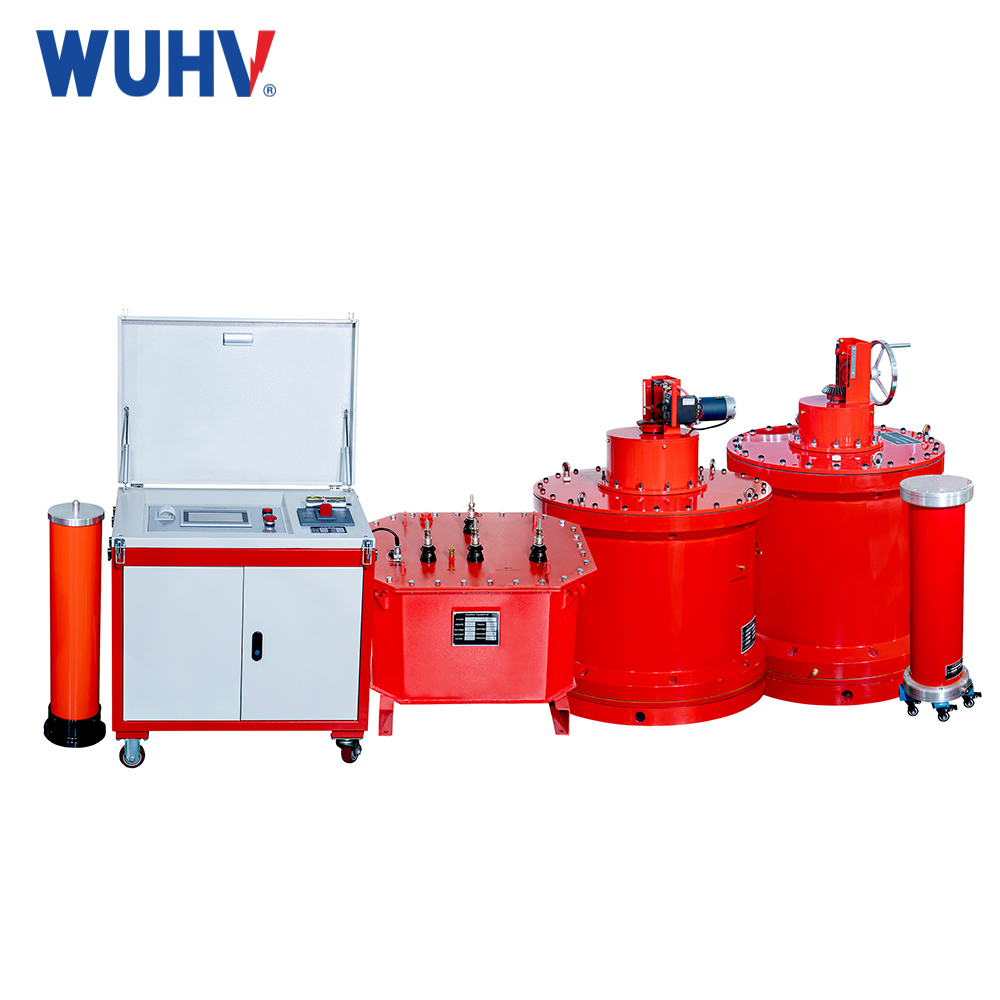
With the intelligent upgrade of the power grid and the large-scale integration of new energy, the demand for on-site verification of relay protection devices continues to grow. In this context, how to choose a portable testing device that truly meets on-site needs has become a practical problem faced by power operation and maintenance personnel.
Step 1: Clarify the testing tasks and usage scenarios
The starting point of selection is to define "what to test" and "where to test". The requirements for equipment in laboratory factory debugging and on-site maintenance of substations are completely different. On site operation and maintenance scenarios should prioritize models that are portable, sturdy, easy to operate, and have strong battery life; Complex fault reproduction and deep analysis require equipment with multi-channel synchronization and high-performance computing capabilities. The user base of portable devices has expanded from traditional power companies to the electrical maintenance departments of rail transit, petrochemical facilities, new energy power stations, and large industrial and mining enterprises. The diversification of application scenarios means that when selecting, it is necessary to first anchor one's own main battlefield.
Step 2: Match channel configuration and do not blindly pursue high-end configurations
The number of voltage and current output channels directly determines the protection scheme that can be covered by a single test. The six channel configuration of 3-phase current and 3-phase voltage is the basic threshold for three-phase secondary injection testing of distribution protection, and is suitable for standard schemes such as overcurrent protection and directional overcurrent protection. On this basis, adding a voltage channel to form a 3I+4V seven channel configuration is the most cost-effective hardware upgrade option - the additional voltage channel can undertake key functions such as synchronous inspection, zero sequence compensation, and directional boundary scanning. Some models of Wuhan UHV and other enterprises are designed around this configuration idea. For complex tests such as differential protection that require simultaneous driving of both sides of the protection zone, configurations with 6-phase current or even higher channel numbers need to be considered.
Step 3: Review hard indicators such as accuracy and output capacity
Accuracy is the foundation of a testing instrument. The output accuracy of current and voltage should be better than 0.1%, the phase accuracy should be controlled within 0.1 °, and the frequency accuracy should reach the level of 0.001Hz. This is a prerequisite for conducting precise value verification and characteristic curve scanning. In terms of output capacity, single-phase 30A (sustainable for 1-10 seconds) can cover the majority of CT secondary fault current simulation requirements, while special scenarios such as motor start-up require 45A or higher output. The technology route of power amplifiers is also worth paying attention to. D-class switching amplifiers have become the mainstream choice for portable devices due to their high efficiency and small size, while linear amplifiers have more advantages in signal purity.
Step 4: Investigate software functionality
Hardware is the foundation, software determines the upper limit. Functions such as state sequence, differential characteristic testing, whole set transmission testing, and harmonic analysis should be considered as standard configurations. In terms of operation interface, the external computer software type has strong functions and convenient report generation, while the built-in industrial control computer touch screen type has a high degree of integration and is more suitable for rapid on-site debugging.
Step 5: Balance portability, power supply, and after-sales support
True portability should balance weight and durability. The current mainstream portable models weigh between 3.5kg and 15kg, and lightweight products can be controlled below 4kg. The built-in lithium battery can support continuous operation for more than 8 hours, and the AC/DC adaptive power supply capability can cope with substation sites without AC power supply. After sales service cannot be ignored either - the manufacturer's technical support response speed, calibration service network, and software upgrade capabilities are related to the reliable operation of the equipment throughout its entire lifecycle.
Enterprise Practice and Industry Trends
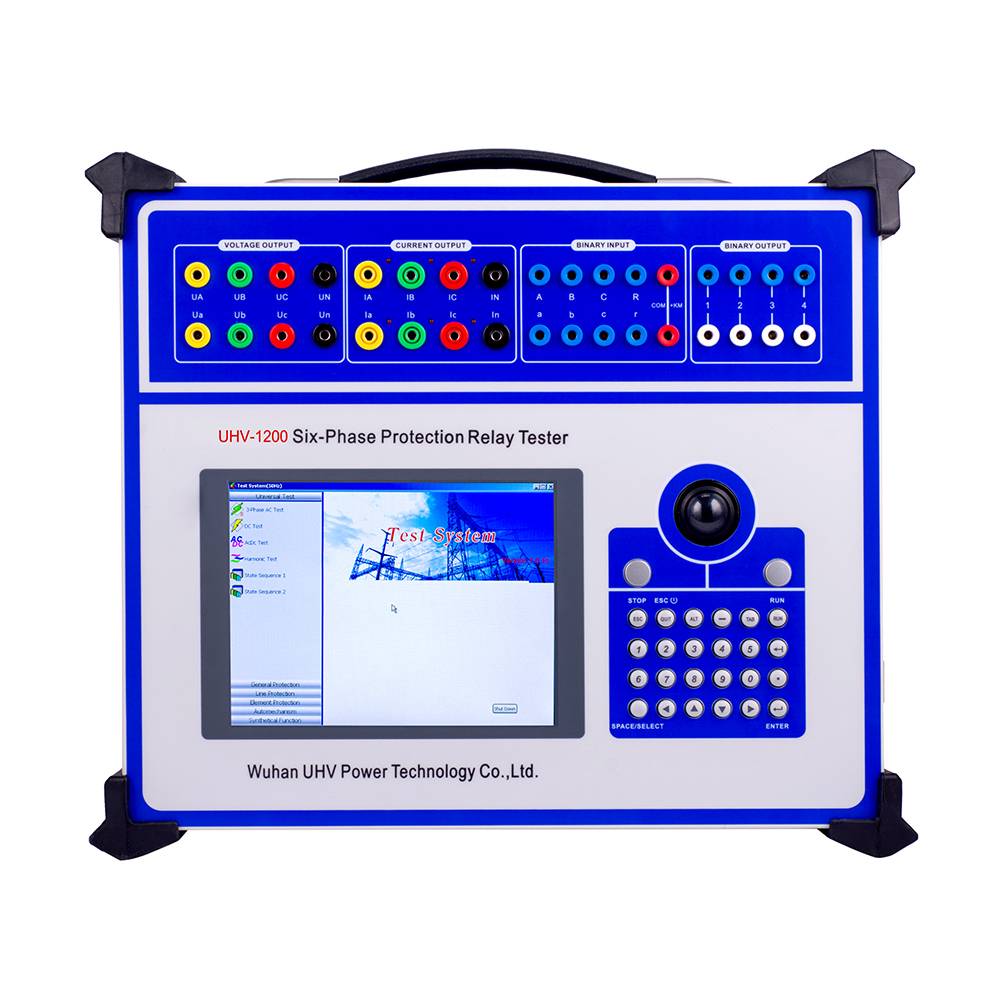
In this field, Wuhan UHV Power Technology Co., Ltd. has formed a complete product line covering relay protection and secondary circuit testing after 22 years of technological accumulation. Its UHV-1200 microcomputer relay protection tester supports flexible combination output of 6-phase voltage and 6-phase current, with debugging error controlled within ± 0.1%, and can simulate complex power grid fault scenarios. From the perspective of the industry as a whole, portable relay protection testing equipment is evolving from basic constant value verification tools to integrated digital interfaces, waveform playback analysis, and automatic report generation. Product design is focusing on both "minimalist operation" and "intelligent diagnosis" in parallel. For the selector, the regression testing task itself, finding a balance point that matches their own needs between channel capability, accuracy indicators, portability, and software ecology, is far more practical than chasing the highest number on the parameter table.