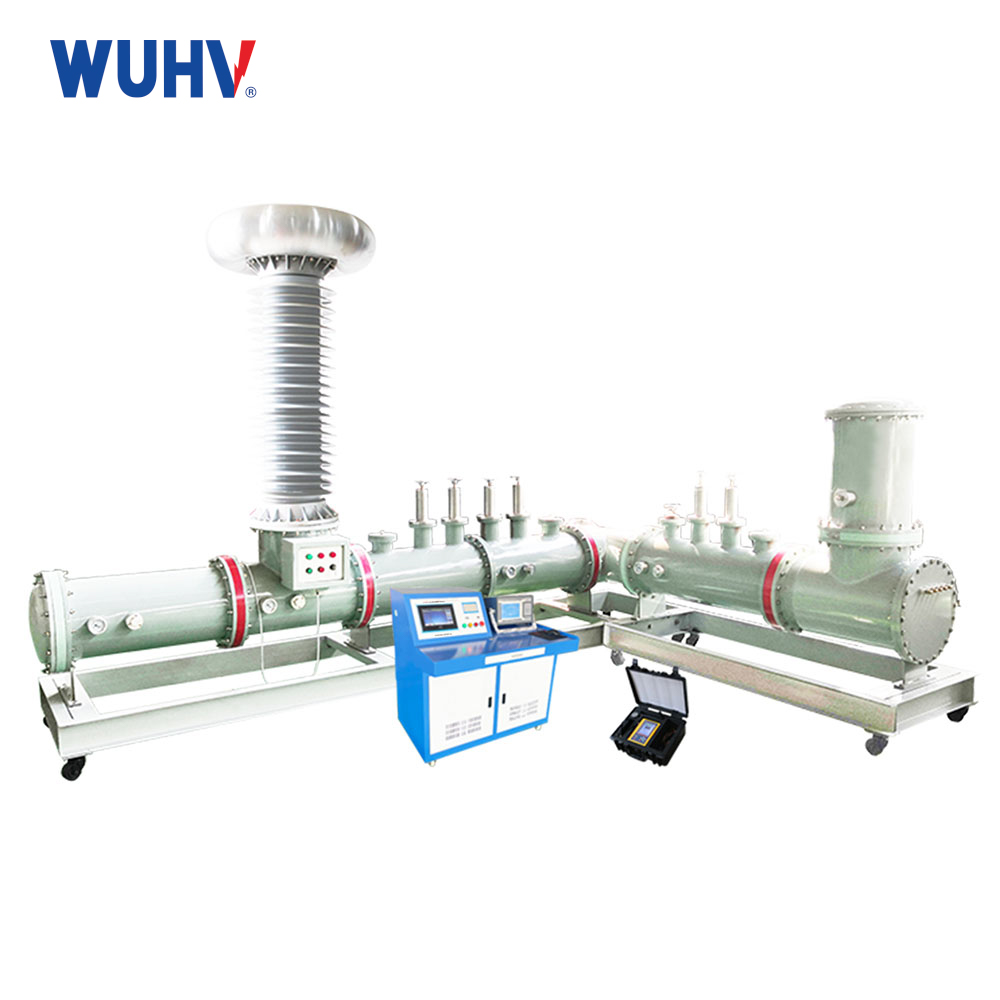
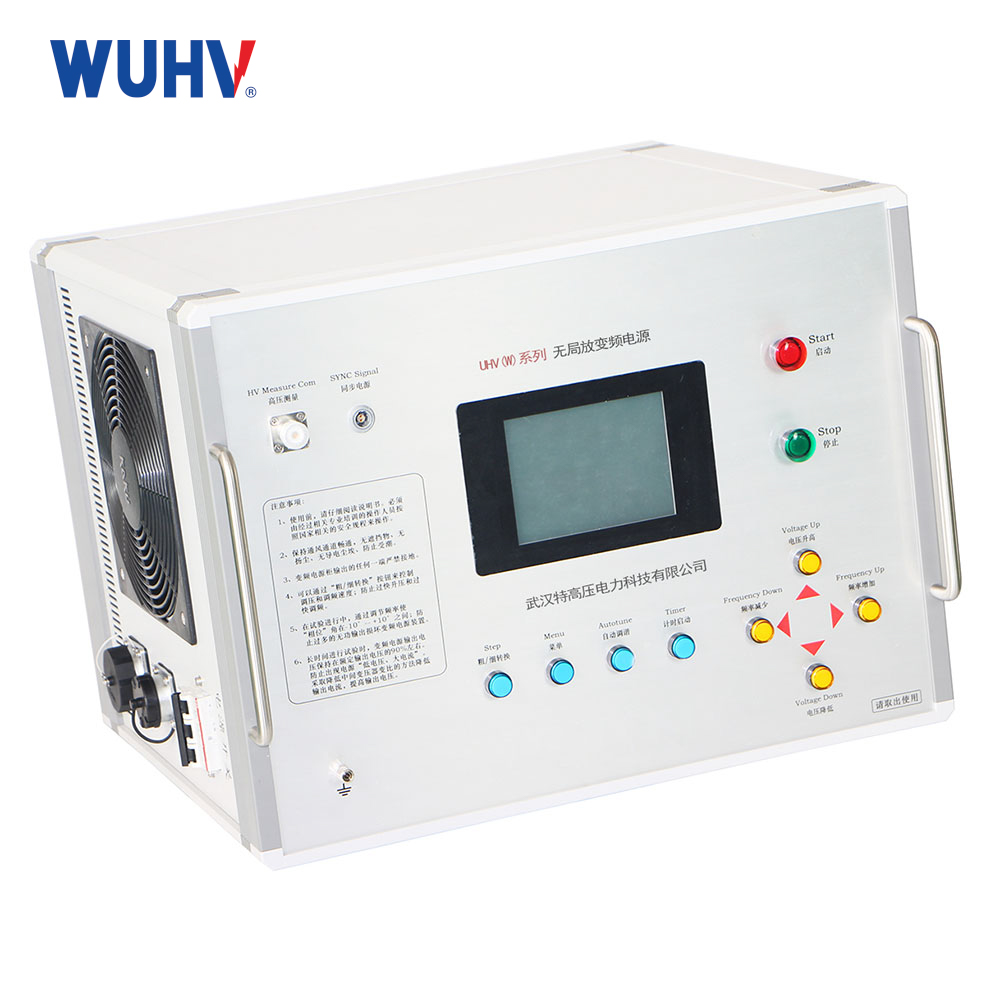
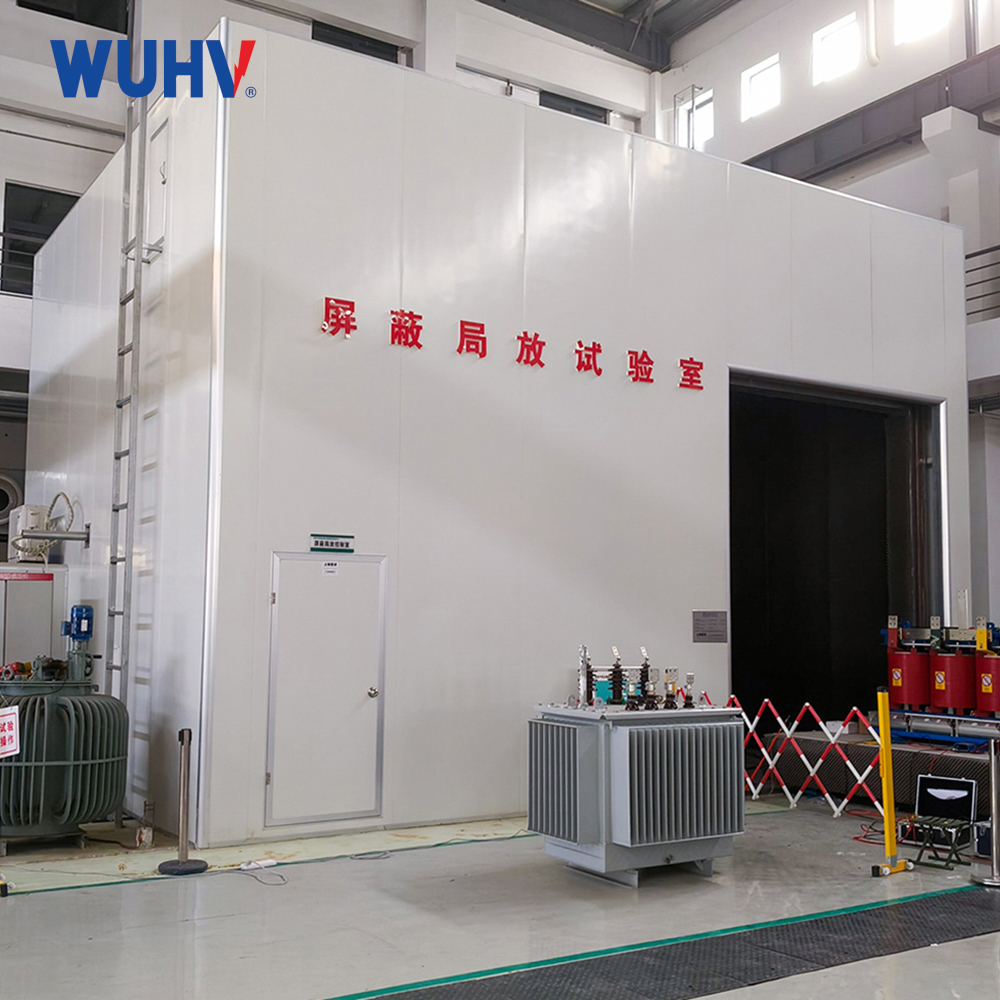
GIS Partial Discharge Detector
Product Introduction
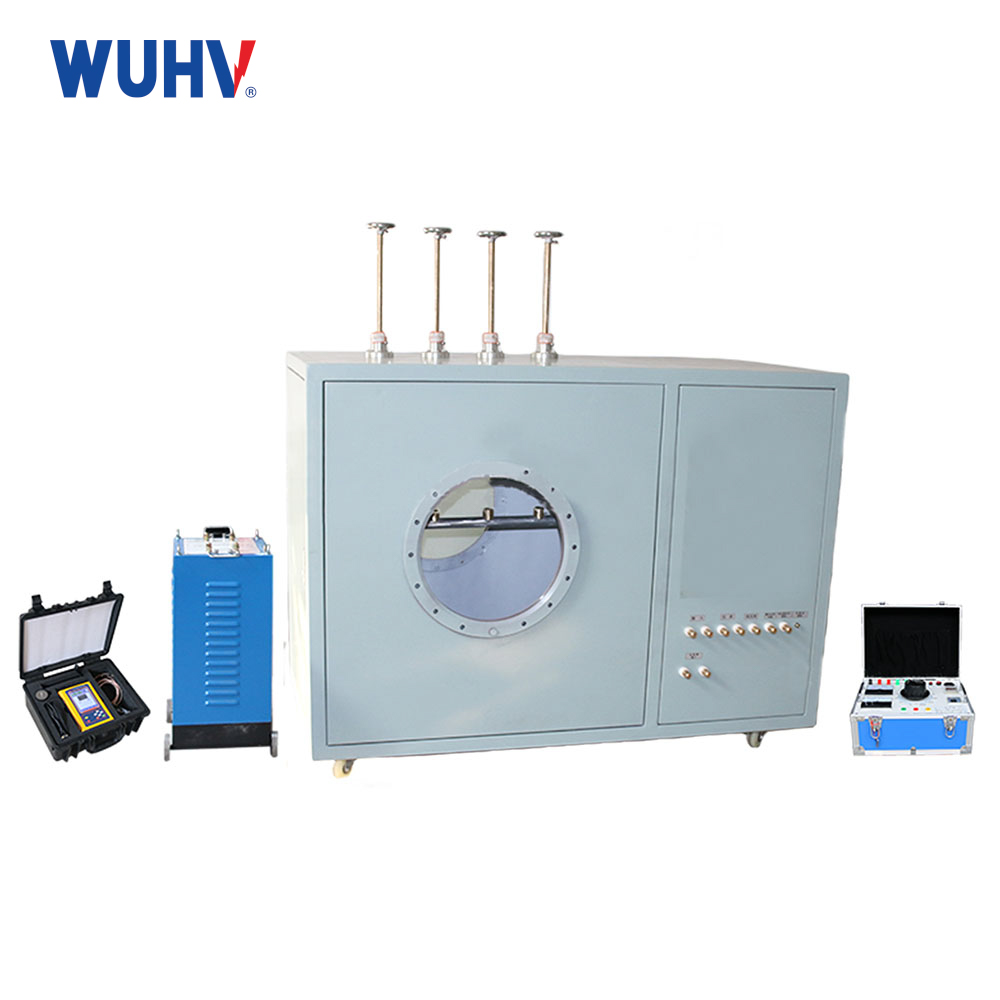
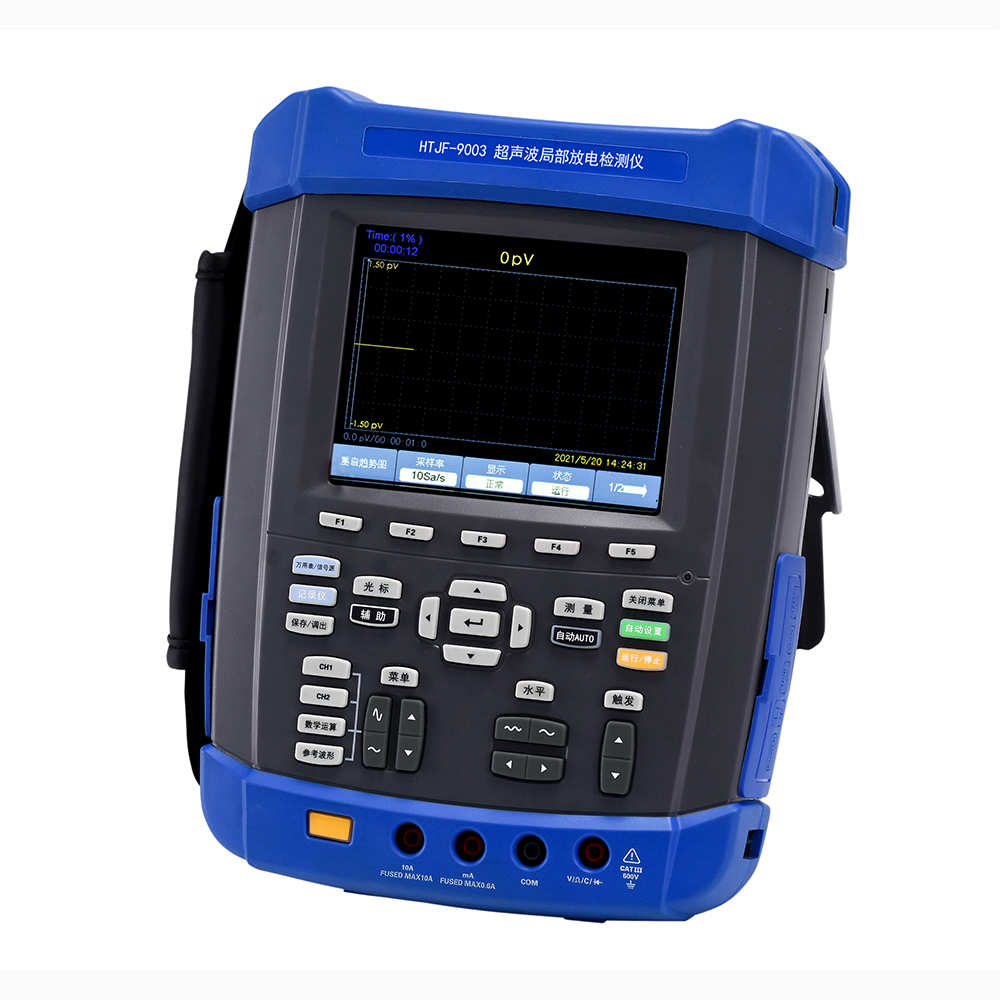
The UHV-9003 Portable Ultrasonic Partial Discharge Detector is an intelligent portable detection device designed for on-site condition monitoring of power equipment. It is mainly used to detect and identify partial discharge phenomena in high-voltage electrical equipment and assist in quickly locating potential insulation defects.
The partial discharge detector employs multi-sensor signal acquisition technology, integrating multiple detection methods including TEV transient earth voltage, ultrasonic, HFCT high-frequency current, and UHF ultra-high frequency, enabling comprehensive analysis for different types of high-voltage equipment and partial discharge signals.
그만큼partial discharge detector factory adopts technologies such as multi-stage detection, frequency down-conversion, high-speed A/D conversion, digital signal processing, and adaptive filtering, effectively reducing environmental noise and electrical interference and improving the reliability of partial discharge detection data.
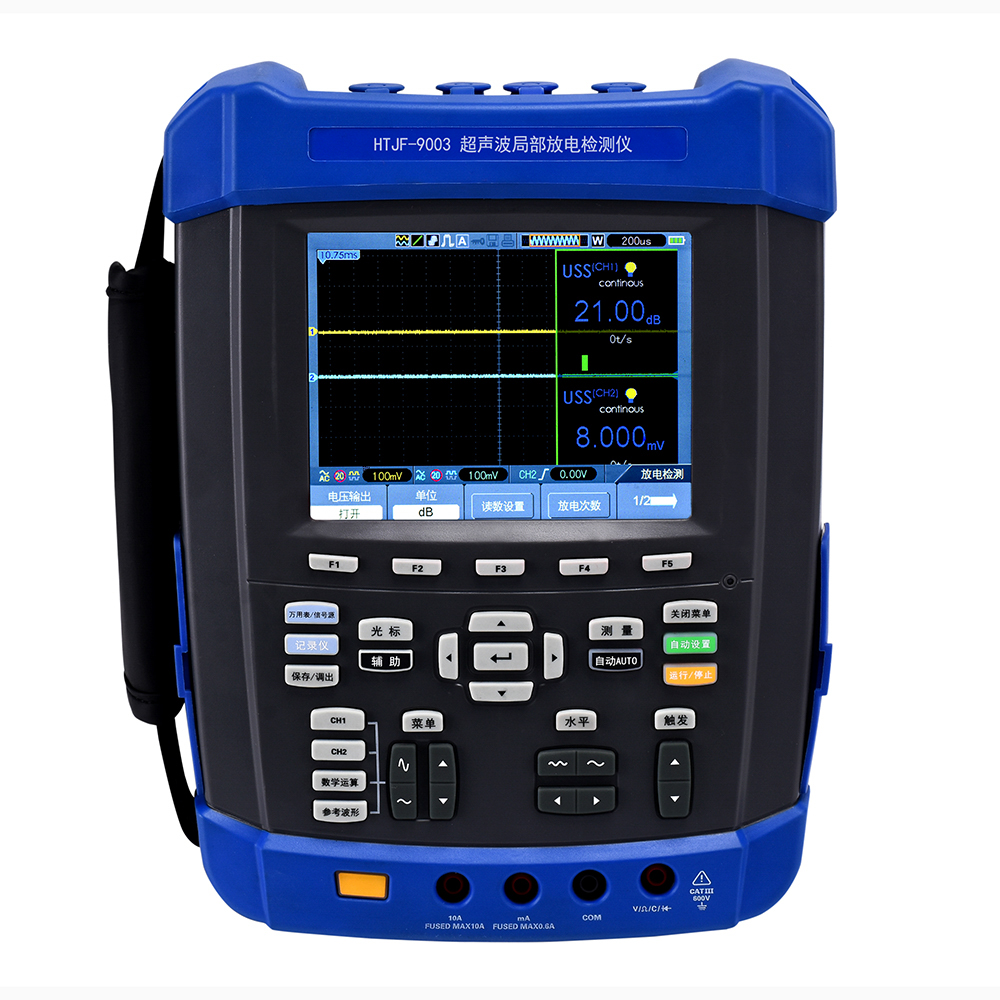
제품 특징
1.The partial discharge analyzer supplier uses multi-level detection and frequency reduction technology to reduce the frequency of the discharge signal. At the same time, the high-speed AD conversion circuit is used to complete the digitization of the signal, and the reliability of the detected data is ensured through interference signal processing methods such as digital signal processing and adaptive filtering.
2. 다양한 고전압 장비에서 부분 방전으로 인해 생성된 다양한 신호를 수집하여 장비의 라이브 상태를 신속하게 충전할 수 있습니다.
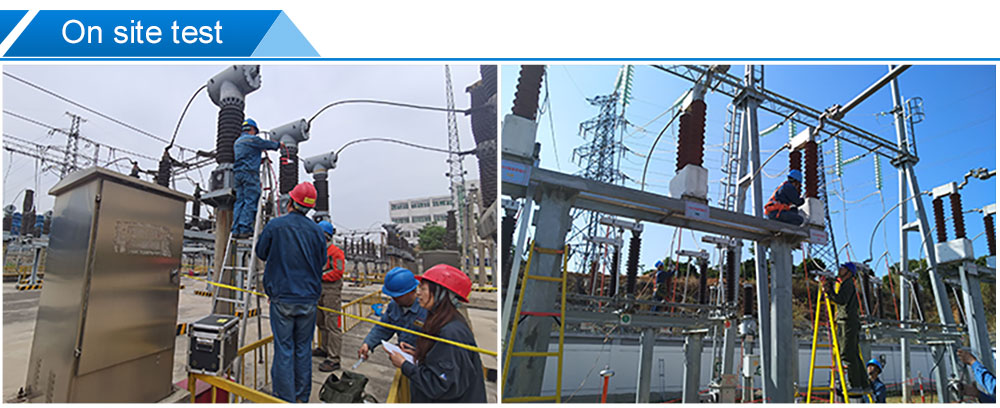
3. The partial discharge detector manufacturer can be installed and tested in the running state of the device, without any impact on the normal operation of the device.
Product Functions
1. Multi-Sensor Signal Acquisition: The 부분방전 시험기 is equipped with a suite of sensors to capture different types of PD signals, including a composite TEV sensor, an ultrasonic sensor, a high-frequency current transformer (HFCT), and a UHF sensor. This allows for comprehensive detection across various equipment types and PD phenomena.
2. Signal Processing and Digitization: It uses multi-stage detection and frequency reduction technology to lower the frequency of discharge signals. A high-speed AD conversion circuit digitizes the signals, and digital signal processing with adaptive filtering is employed to suppress interference, ensuring the reliability of detection data.
3. Online Testing Capability: key function is its ability to be installed and tested while the equipment is in normal operation, without any influence on the equipment's running state. This enables condition-based monitoring without outages.
4. Data Measurement and Display: The partial discharge tester factory provides quantitative measurements for each sensor type. For example, it measures TEV signals in dBmV (0-60dBmV), ultrasonic signals in dBμV (-7 to 68dBμV), and can display the maximum pulse/period and other parameters. It features an LED display that shows measurement values and battery status.
5. Portable and Rugged Design: The unit is housed in a protective case with an IP53 protection rating, making it suitable for demanding field environments. It is lightweight and includes standard connectors for sensors, headphones, and charging.
Product Advantages
1. Live Testing Without Interruption: The most significant advantage is the ability to perform tests while the equipment is energized and in service. This eliminates the need for costly and disruptive outages for routine PD checks.
2. Versatile Detection Capabilities: By incorporating four different sensing technologies (TEV, Ultrasonic, HFCT, UHF), the instrument can detect a wide range of PD types in various equipment, from switchgear to cables and GIS, increasing the chance of identifying diverse fault mechanisms.
3. High Accuracy and Interference Rejection: The advanced signal processing, including adaptive filtering and frequency reduction, effectively separates genuine PD signals from background noise, leading to more accurate and reliable measurement data.
4. Quick Condition Assessment: The partial discharge tester allows for rapid on-site evaluation of equipment insulation condition, enabling maintenance personnel to make informed decisions promptly, improving equipment reliability and safety.
5. Ease of Use and Portability: The portable, rugged design and simple sensor connections make it practical for field engineers to use in various substation and industrial environments.
Application Scenarios
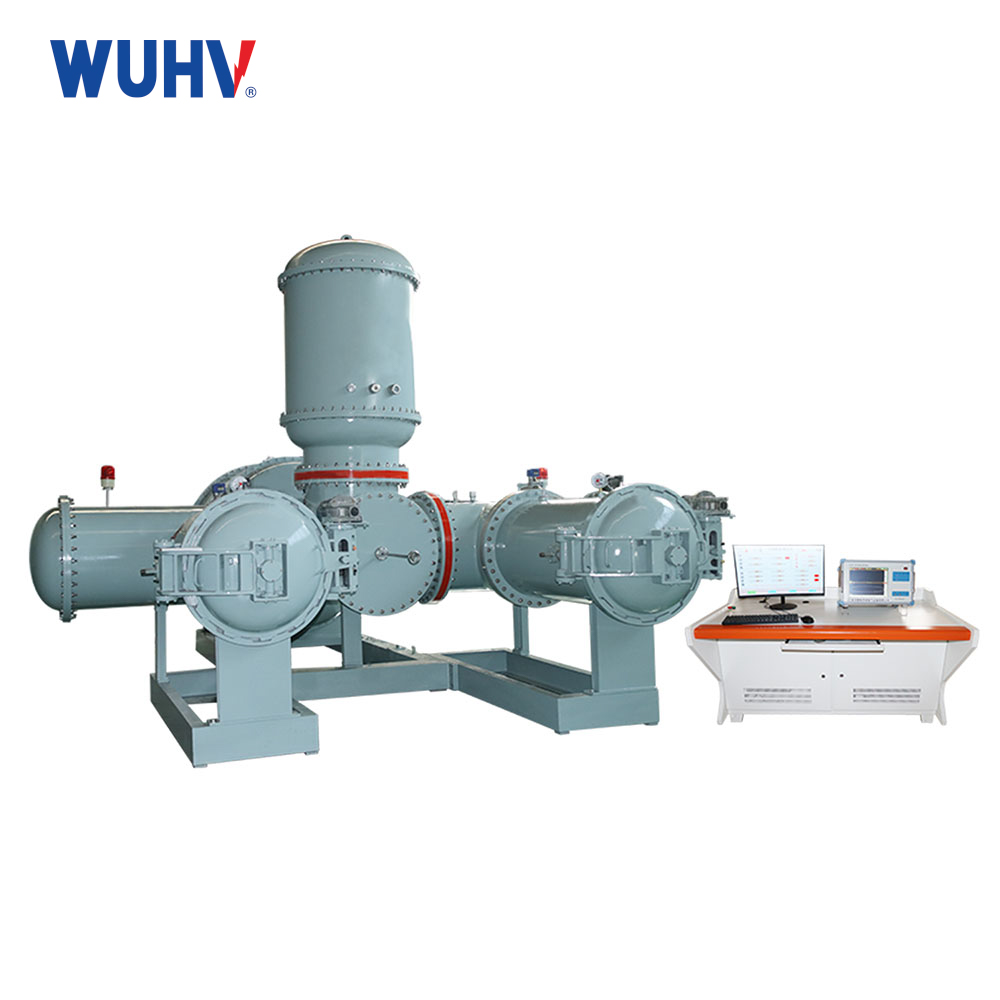
1. Switchgear and GIS: Using TEV and ultrasonic sensors to detect PD activity in metal-clad switchgear and gas-insulated switchgear, helping to identify issues like loose connections or insulation defects.
2. Power Cables: Employing HFCT sensors to detect PD in cable terminations and joints, indicating potential cable insulation degradation.
3. Transformers and Reactors: Using UHF and ultrasonic sensors to identify PD within transformer tanks, which can signal winding or bushing problems.
4. Rotating Machines: Applying ultrasonic sensors to detect PD in generators and motors, often related to stator winding insulation issues.
5. General Condition Monitoring: Used by utilities, industrial plants, and testing service companies as part of routine predictive maintenance programs to monitor the health of critical high-voltage assets.
FAQ
1. What is partial discharge and why is it important to detect it?
Partial discharge is a localized electrical discharge that occurs in insulation that does not completely bridge the entire insulation path. It is a sign of insulation degradation and can lead to complete failure of high-voltage equipment. Detecting and locating PD early allows for predictive maintenance, preventing costly unplanned outages and equipment damage.
2. Can this instrument be used on energized equipment?
Yes, this is a key feature. The partial discharge tester manufactures is specifically designed for online testing and can be installed and operated while the high-voltage equipment is running. It does not interfere with normal equipment operation, making it ideal for routine condition assessments.
3. How does the instrument handle background noise and interference?
그만큼partial discharge tester uses advanced techniques to ensure measurement accuracy. It employs multi-stage frequency reduction and digital signal processing, including adaptive filtering, to effectively distinguish genuine partial discharge signals from external environmental and electrical noise, thus improving the reliability of the detection data.
4. Is the unit portable and suitable for field use?
Yes, the detector is a portable, hand-held unit designed for field use. It comes in a protective case with an IP53 rating (protected against limited dust ingress and spraying water). It weighs less than 3 kg, has a long battery life, and includes standard connectors for easy sensor attachment.
5. What are the operating environment requirements?
그만큼partial discharge analyzer is designed to operate in a wide range of conditions. It can function at altitudes up to 3000m, in ambient temperatures from -20°C to +60°C, and relative humidity up to 95%, making it suitable for use in diverse climates and substation environments.
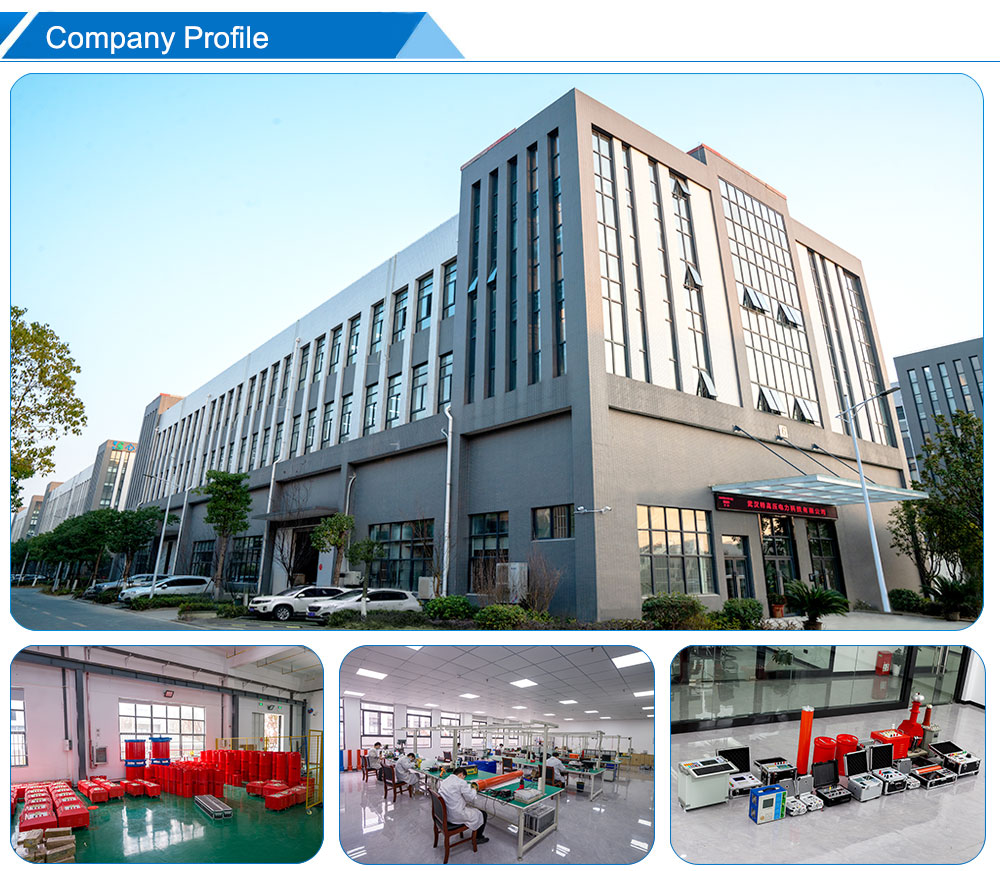
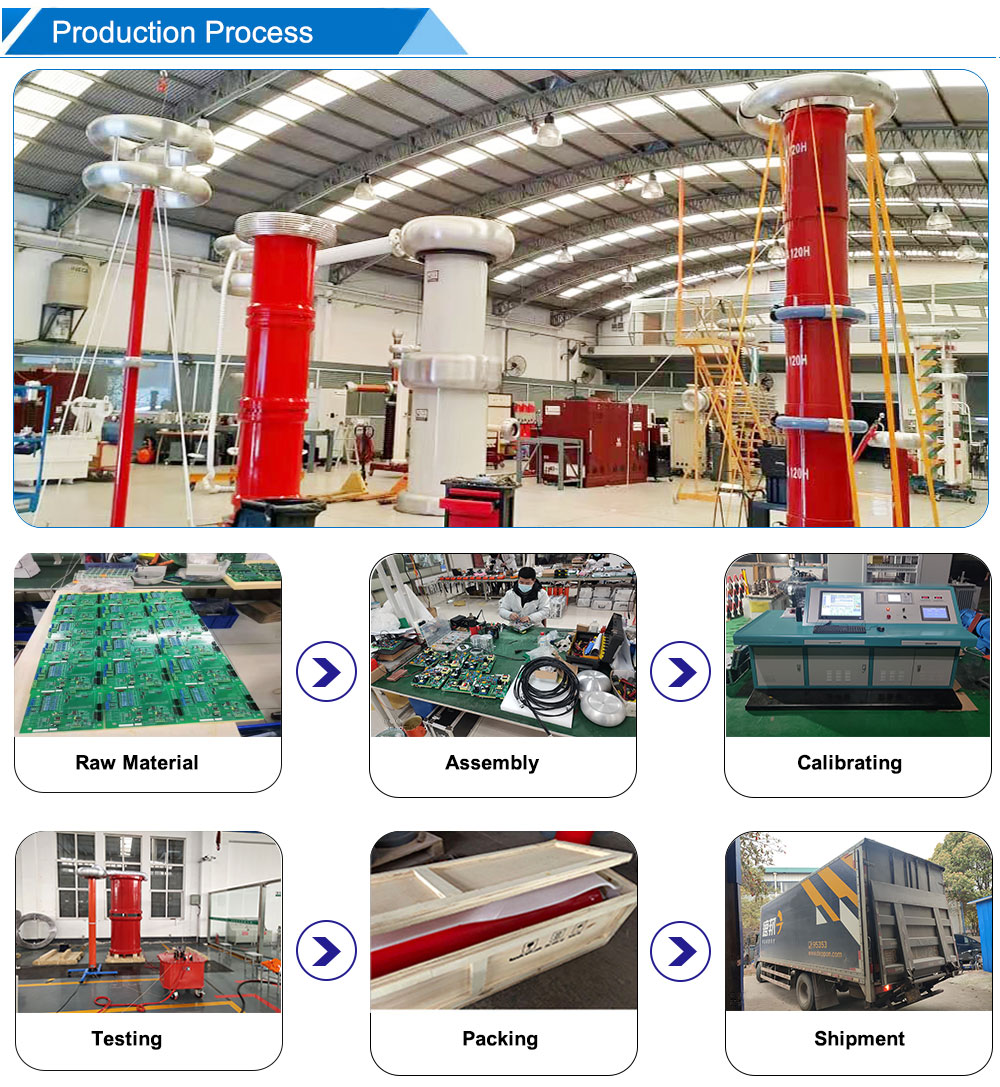
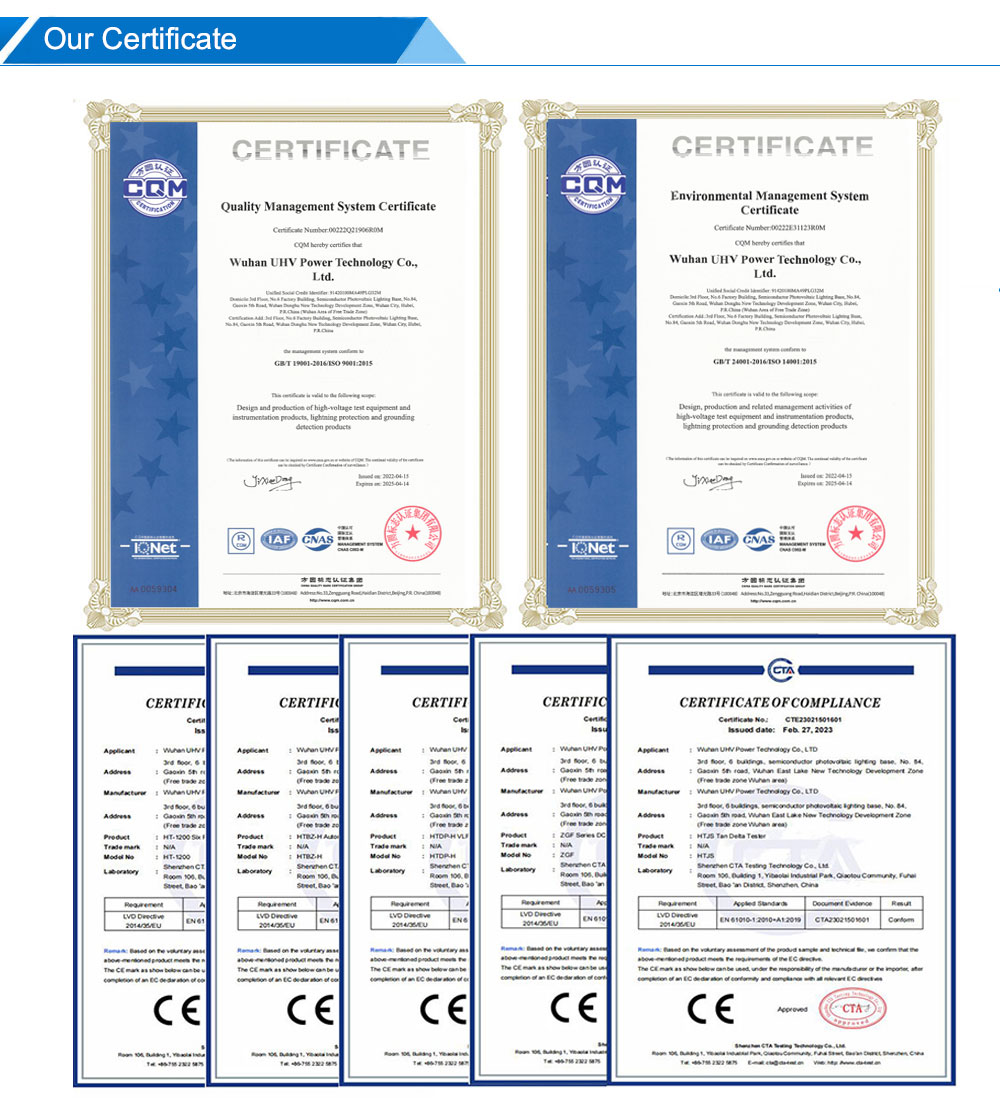
As an experienced high-voltage testing equipment manufacturer and supplier, we are committed to providing cost-effective and reliable partial discharge detection solutions for utilities, substations, power plants, and industrial applications.With over two decades of specialization in high-voltage power testing equipment, Wuhan UHV Power Technology Co., Ltd. brings together the advantages of a direct-sale manufacturer and an in-house production facility. Our integrated approach combines large-scale manufacturing capacity with rigorous quality control, ensuring consistent, reliable performance while allowing us to offer highly competitive factory-direct pricing. Our extensive product portfolio covers a broad spectrum of high-voltage testing applications, and we further distinguish ourselves through responsive technical support and tailored customization services to meet the specific demands of each project.