In the maintenance system of high-voltage power equipment, partial discharge detection has become one of the most effective means to discover insulation hazards. Among various partial discharge detection methods, transient earth voltage (TEV) detection has become the preferred solution for large-scale daily inspections of distribution network switchgear and ring main units due to its non-invasive operation, no need for power outages, and high detection efficiency.
However, when facing TEV detection equipment with prices ranging from thousands to hundreds of thousands of yuan in the market, how to make reasonable selection judgments is a practical problem that every power operation and maintenance personnel needs to face. Based on the technical accumulation and product practice of Wuhan UHV Power Technology Co., Ltd. in the field of partial discharge testing, the selection points of TEV partial discharge detectors are summarized from three dimensions: core technical indicators, adaptation to usage scenarios, and manufacturer service capabilities.
1、 Testing technology combination: a single method is not enough
The core principle of TEV detection is to detect internal discharge activity by capturing transient electromagnetic wave signals generated by partial discharge on the surface of the metal casing of the equipment. The signal frequency range is usually between 3MHz and 100MHz. This method is easy to operate, does not require power outages, and only takes about 10 seconds to detect a single switchgear, making it very suitable for large-scale surveys.
However, TEV detection also has inherent limitations. It mainly identifies partial discharge signals near the equipment casing, and for discharges deep inside the equipment, signal attenuation may be more significant. Therefore, the current mainstream solution is a dual technology combination of TEV and ultrasound (US). TEV is responsible for rapid screening, while ultrasound is responsible for precise positioning. The two complement each other and can cover more types of faults.
그만큼partial discharge detection system of Wuhan UHV is designed based on this idea, integrating multiple sensing technologies such as transient earth voltage (TEV), ultrasonic (UA), high-frequency current transformer (HFCT), and ultra-high frequency (UHF), which can flexibly meet the detection needs of different equipment such as switchgear, cables, transformers, GIS, etc.
2、 Key performance indicators: equal emphasis on sensitivity and anti-interference
When selecting TEV detectors, several core parameters deserve special attention.
In terms of bandwidth detection, it is recommended to choose devices in the 3-100MHz range, which covers the main energy distribution range of TEV signals. The measurement range should be between 0-60dB, and the measurement error should be controlled within ± 2dB to meet the requirements of routine operation and maintenance.
Sensitivity is a key indicator for distinguishing device quality. Partial discharge is an early fault signal, and often the discharge amount is very weak. Insufficient sensitivity means the risk of missed detection. The detection sensitivity of Wuhan UHV-2000A partial discharge tester can reach 0.1pC, and the measurement frequency band covers 10kHz to 300kHz. The programmable filter supports flexible setting of multiple levels, and can select the appropriate frequency band combination according to different testing scenarios, while ensuring sensitivity and anti-interference ability.
The anti-interference ability cannot be ignored. The substation environment is complex, with various high-voltage equipment operating simultaneously and numerous sources of electromagnetic interference. Some equipment performs well in the laboratory but has frequent false alarms on site. Wuhan UHV adopts digital windowing technology in anti-interference, selectively collecting discharge signals in specific phase intervals by setting a time window, eliminating fixed phase interference sources, and making the measurement results more accurately reflect the insulation condition of the equipment itself.
3、 Intelligence and Data Management: From "Measuring Values" to "Observing Trends"
In the past, many partial discharge detection devices could only display one value, and manual recording was required after the measurement was completed. Nowadays, operation and maintenance personnel prefer devices that can automatically save data, generate detection reports, display trend curves, and support comparative analysis of historical data.
The partial discharge detection system of Wuhan UHV has made sufficient consideration in this regard. The UHV-2000C partial discharge detection system adopts a 10.1-inch touch screen instead of the traditional oscilloscope and physical knob operation method, supporting two-dimensional and three-dimensional partial discharge map display, and can generate various professional maps such as PRPS and PRPD, intuitively displaying the phase distribution, amplitude characteristics, and repetition frequency of discharge pulses, and automatically generating test reports. These functions can save a lot of data organization time in practical work, allowing testers to devote more energy to analyzing and judging the results.
4、 Scenario adaptation: from switchgear to multi device coverage
The adaptability of TEV detectors in different scenarios is also a factor that needs to be considered when selecting. Distribution network switchgear and ring main unit are the most typical application scenarios for TEV detection, while transformers, cable terminals, GIS and other equipment may require comprehensive diagnosis in combination with UHF or HFCT channels.
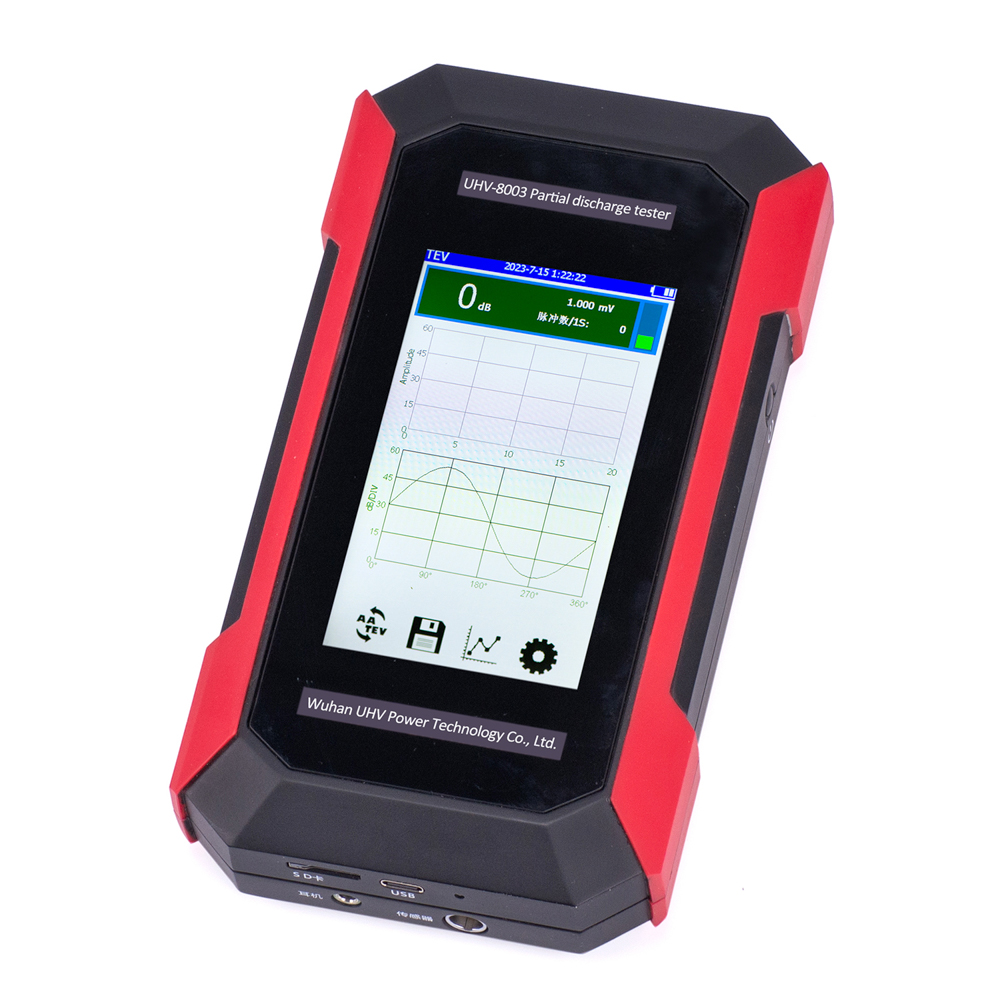
The product line of Wuhan UHV covers various forms from handheld inspection devices to desktop detection systems. The UHV-8003 partial discharge inspection instrument has a testing bandwidth range of 30kHz to 2.0GHz and uses non-invasive detection methods. During the testing process, there is no need to cut off power, and it can be widely used in high-voltage switchgear, ring main units, transformers, etc GIS、 Insulation status detection of cables and other equipment. This device provides various discharge spectra such as time-domain waveform, PRPD, PRPS, etc., making it convenient for operators to analyze and distinguish different discharge types.
5、 Manufacturer service capability: considerations beyond equipment
Partial discharge detection not only involves the equipment itself, but also tests detection experience and data analysis capabilities. Many users are not familiar with various signal waveforms when they first encounter partial discharge testing, so the manufacturer's training support and after-sales service are particularly important. Buying the equipment is just the beginning, and whether it can truly play its value in the future often depends on whether the technical support is in place.
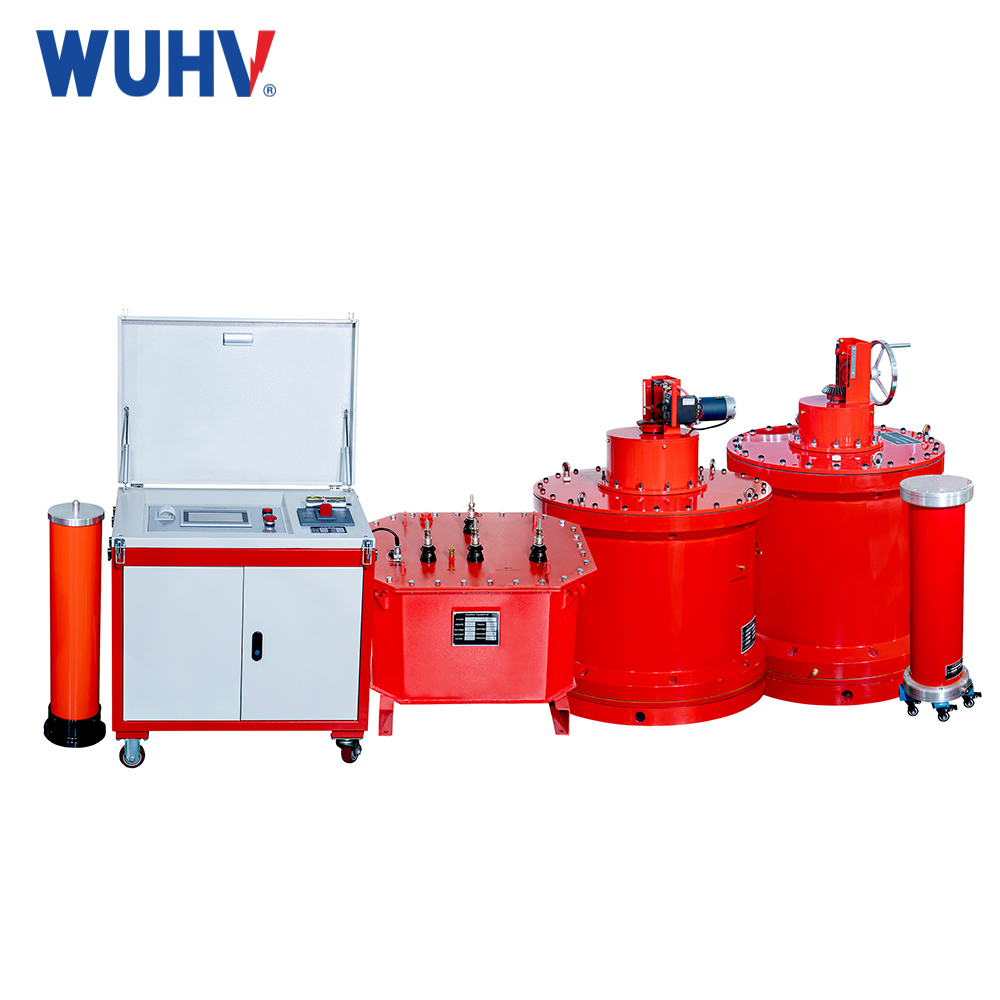
Wuhan UHV Power Technology Co., Ltd. is rooted in Wuhan · China Optics Valley. After more than 20 years of development, it has formed a complete system covering more than 100 products in 15 categories, including series resonance test devices, partial discharge testing systems, high-voltage insulation withstand voltage, transformer testing, circuit breaker testing, etc. The company's technical accumulation and service experience in the field of high-voltage electrical measurement provide full support for users of TEV partial discharge detectors, from selection consultation to on-site training.
Choosing a suitable TEV partial discharge detector should not only consider the price, but also take into account the combination of detection methods, sensitivity and anti-interference ability, data analysis function, and the manufacturer's technical service capabilities. Wuhan UHV Power Technology Co., Ltd. provides a noteworthy option for power operation and maintenance units with a multi-sensor fusion technology path and product design that is close to on-site needs. In the current era where equipment insulation status monitoring is increasingly valued, selecting the right tools is essential to truly detect potential hazards before power outages occur.