With the continuous expansion of the power grid and the rapid growth of new energy installed capacity, the demand for insulation testing of high-voltage electrical equipment is increasing day by day. As the core equipment for detecting insulation strength and leakage current of power cables, transformers, lightning arresters and other equipment, the selection of DC Hipot Tester directly affects the accuracy of test data and the safety of on-site operations. Faced with various products in the market ranging from tens of kilovolts to hundreds of kilovolts, from handheld to large desktop, how to scientifically select has become a problem that power operation and maintenance units and testing institutions must take seriously.
1、 First, clarify three questions before discussing the selection
The core basis for selection is the voltage level and leakage current range of the test sample. Before reviewing the product manual, it is recommended to clarify three questions: What equipment should be tested? What standards should be followed? In what environment is it tested?
The requirements for testers vary significantly among different devices. The 10kV distribution network lightning arrester test usually only requires a 60kV output voltage and milliampere level current to meet, while the 220kV cable DC withstand voltage test requires higher voltage levels and load capacity. For equipment with the same 10kV rating, the current requirement for cable testing (2-5mA) is much higher than that for lightning arrester testing (1-2mA). If the wrong current specification is selected, either the equipment cannot be charged properly, resulting in testing interruption, or excessive procurement leads to resource waste.
The testing standards also determine the selection direction. The domestic DC high voltage test is mainly based on DL/T 474.2-2018 "Guidelines for Implementation of On site Insulation Test" and GB/T 50150-2016 "Standard for Handover Test of Electrical Equipment in Electrical Equipment Installation Engineering". Different standards have clear regulations on the test voltage values, and the selection must be based on the standard requirements.
2、 How to determine the core parameters - voltage, current, and accuracy each have their own ways
Output voltage: Adequate margin is key. The selection principle is that the maximum output voltage of the selected equipment must be greater than or equal to the maximum test voltage, with a margin of 10% -20%. For example, when conducting a 35kV DC withstand voltage test on a 10kV cable, equipment with a rated voltage of not less than 60kV should be selected. It is generally recommended to test a voltage that is 1.2 to 1.5 times higher than the rated voltage of the device being tested.
Output current: Calculate the leakage current and charging current. The rated output current must be greater than the sum of the maximum leakage current and charging current of the tested equipment. The current requirements of different devices vary significantly: the zinc oxide lightning arrester test generally requires ≥ 1mA; The power cable test requires ≥ 3mA, and long cables may require 5mA or higher; Transformer and generator tests may require more than 10mA. When selecting, the rated current should be chosen at 1.5 times the estimated leakage current to avoid insufficient capacity.
Accuracy and stability: Numbers do not lie. The voltage measurement accuracy should be better than level 0.5, and the voltage stability deviation within 30 minutes should not exceed ± 0.5%. Ripple coefficient is a core indicator for measuring the quality of DC high voltage output. The national standard requires ≤ 3%, and high-quality equipment can be controlled within 1% or even 0.5%. Excessive ripple will directly interfere with the measurement results of leakage current.
3、 How to match different devices - selection strategy from cables to lightning arresters
Power cable testing. The core challenge of cable testing lies in the capacitance differences caused by different voltage levels and lengths. The test voltage for 10kV distribution network cables is usually between 30-47kV, and the 60kV/2mA model can be selected to meet this requirement. The test voltage of 35kV cable can reach 105-130kV, and it needs to be upgraded to 120kV/3mA or 200kV/5mA. For high-voltage cables with a test voltage of up to 192-475kV and above, specialized models with a rated voltage of 300kV or above and a current of 5mA or above should be selected.
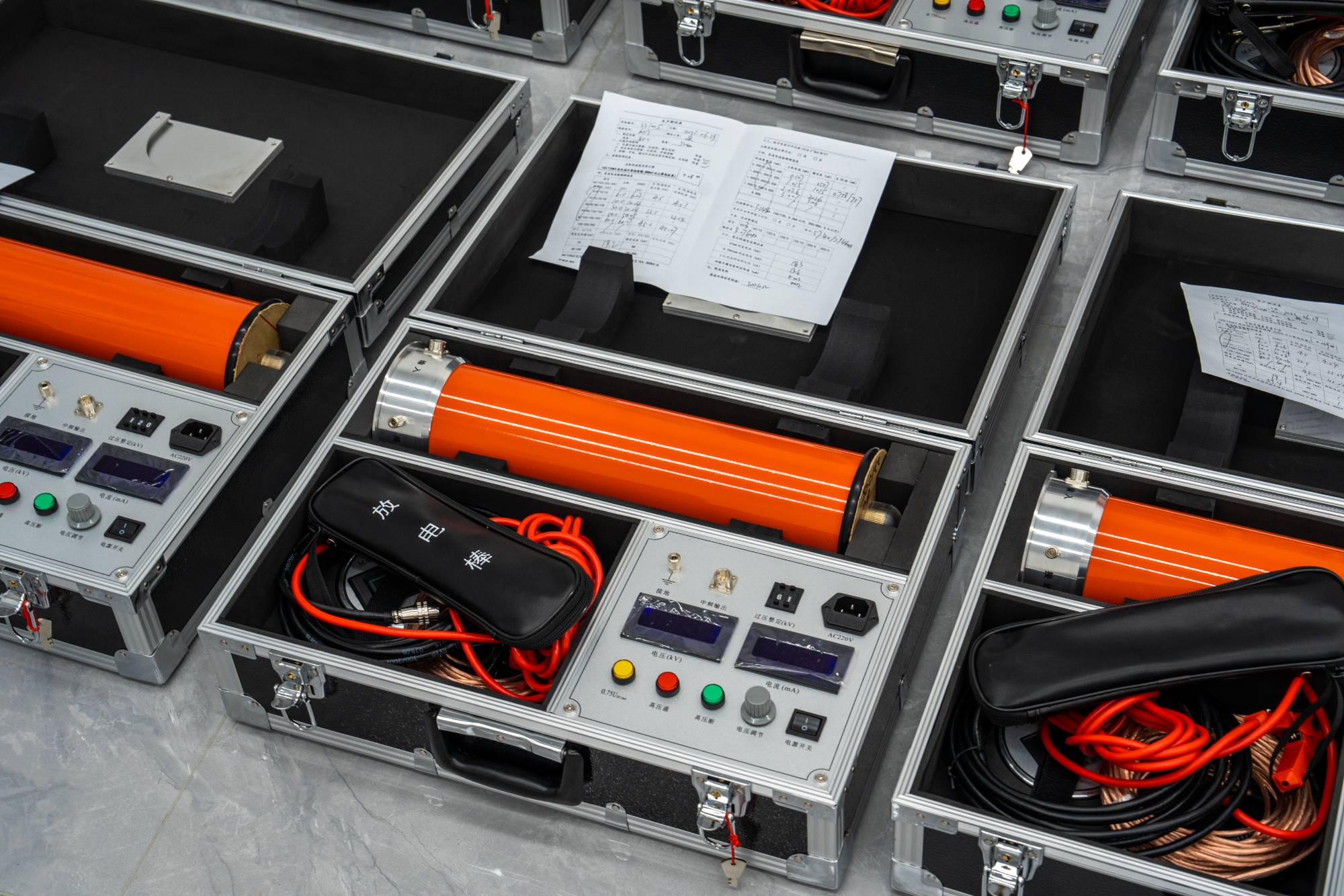
Zinc oxide lightning arrester test. The key to lightning arrester testing lies in precise control of reference voltage and leakage current measurement. The DC reference voltage of the 10kV lightning arrester is about 28kV, and the 60kV/2mA model can be selected. When selecting, special attention should be paid to whether the equipment has a 0.75 times voltage switching function - this is the "gold standard" function for measuring lightning arrester leakage current.
Transformer and generator testing. This type of equipment requires higher current output capability, typically requiring a rated current of 10mA or higher. At the same time, due to the high value of the equipment and the high testing risk, there are higher requirements for voltage stability and the completeness of protection functions.
4、 Security and Intelligence - "Soft Power" that cannot be ignored in selection
High voltage testing is first and foremost a safety test. A qualified DC high voltage tester must have basic safety functions such as overvoltage protection, overcurrent protection, zero position protection, and grounding protection. Zero protection can prevent sudden high voltage rise during startup, while grounding protection ensures that the equipment is well grounded before starting. Some high-end devices have also added internal flashover protection, which can quickly cut off and record the flashover phenomenon during cable testing.
The level of intelligence also affects selection decisions. Intelligent devices with LCD screens and menu operations can automatically boost voltage, record data, and generate reports. Some models also support USB interfaces and upper computer software, greatly improving testing efficiency and data traceability. Traditional equipment adopts pointer type meter heads and manual voltage regulation, which have lower prices but large reading errors and single functions. For units with heavy batch testing tasks, the efficiency improvement brought by intelligence is sufficient to offset the increase in initial procurement costs.
When making a purchase, in addition to paying attention to technical parameters, brand reputation and after-sales service should also be emphasized - choosing a manufacturer that provides complete technical support and equipment maintenance can effectively reduce the risk of equipment use. At the same time, it should be confirmed whether the equipment complies with national or international standards and whether it has valid calibration certificates.
In the final analysis, the selection of DC high-voltage testers is not simply based on voltage levels, but should establish a scientific decision-making system that is demand-oriented, parameter matching, and scenario adaptation. Starting from the actual needs of the tested equipment, precise matching of core parameters such as voltage, current, and accuracy, while balancing safety protection and intelligent functions, is necessary to provide reliable technical support for the safe operation of power equipment while ensuring testing accuracy.