In the safe operation of power equipment, the detection of insulation resistance is an indispensable part. Did you know? Traditional manual inspection is not only inefficient, but may also lead to inaccurate judgments due to subjective factors, laying hidden dangers for potential electrical faults. Is there a smarter and more efficient way to assess the "health status" of insulation? Today, let's talk about the intelligent insulation resistance tester, which is using the power of technology to make the "inner beauty" of power equipment clear at a glance.
Why is insulation resistance so important?
Simply put, insulation resistance is like a layer of "protective film" on power equipment, measuring the ease of current flow in insulation materials.
Insulation resistance ": The higher the value, the better the insulation performance and the less likely it is to cause electrical leakage.
Leakage ": If the insulation resistance is too low, the current is prone to" quietly slip away ", which can lead to a decrease in equipment efficiency or serious accidents such as short circuits and fires.
What are the "stumbling blocks" that affect insulation resistance?
The insulation resistance is not constant, and many factors can affect its performance:
Environmental factors: Temperature and humidity are the "natural enemies" of insulation resistance. A humid and high-temperature environment can significantly reduce insulation performance.
Material aging: Insulation materials are like human skin, which will naturally age and crack over time, leading to a decrease in insulation performance.
Accumulation of dirt: Impurities such as dust and oil adhere to the insulation surface, forming conductive pathways and reducing insulation resistance.
Internal defects of equipment: Minor flaws during the manufacturing process or mechanical damage during operation may affect the integrity of insulation.
Intelligent testing device: Your "fiery eyes and golden eyes"
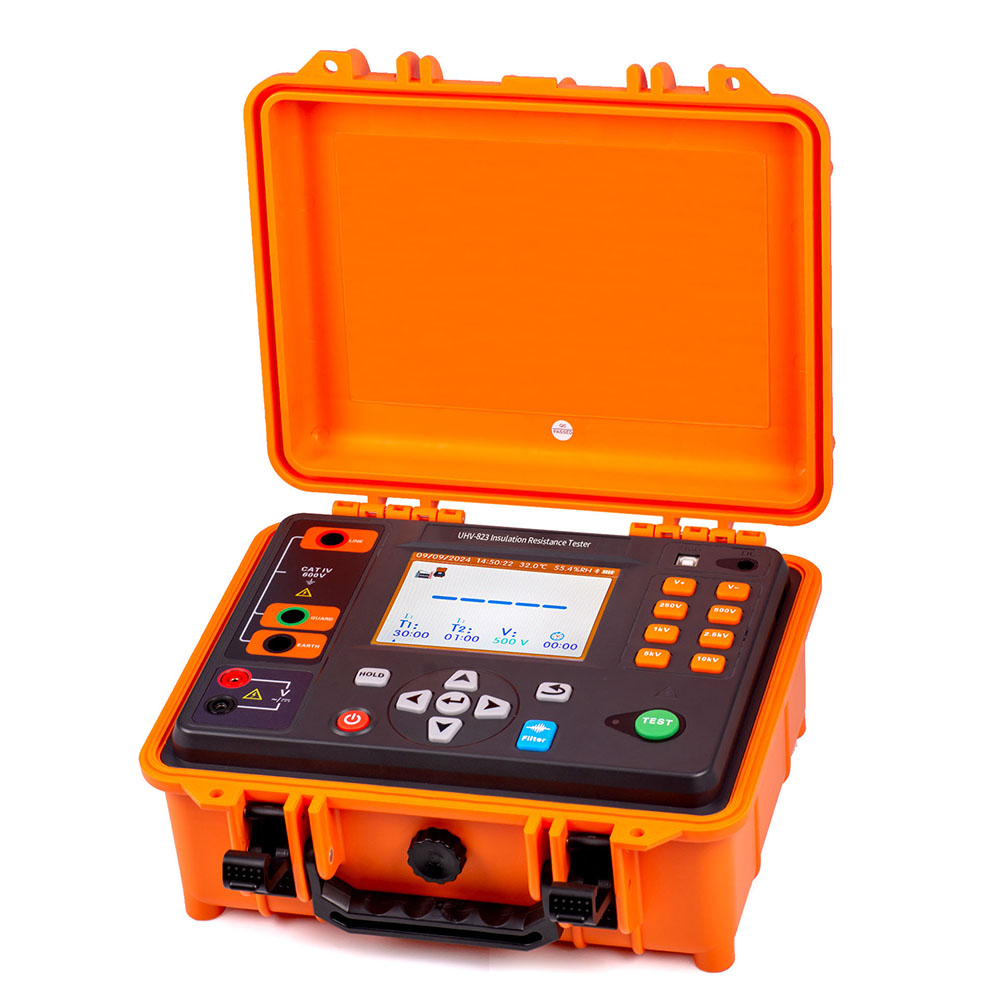
Faced with these complex "stumbling blocks", traditional multimeters or old-fashioned rocking watches have become inadequate. At this point, the intelligent insulation resistance tester comes in handy. It's like installing a pair of "golden eyes" on your electrical equipment, which can accurately and quickly measure insulation resistance.
Automated measurement: Say goodbye to manual operation, complete measurement with just one click, greatly improving work efficiency.
Data analysis and recording: It can automatically record test data, conduct preliminary analysis, generate trend charts, and facilitate comparison and evaluation.
Multiple testing modes: supporting measurements of different voltage levels and testing times to meet the needs of various complex working conditions.
Security protection: equipped with overvoltage, overcurrent and other protection functions to ensure the safety of operators and equipment.
How to use it well to make the detection more outstanding?
To maximize the effectiveness of the intelligent insulation resistance tester, it is necessary to master some skills:
Understand your equipment: Choose the appropriate testing voltage and testing time for different types of power equipment (such as transformers, cables, motors, etc.).
Pay attention to environmental conditions: Before conducting testing, try to eliminate the interference of environmental factors, such as choosing dry weather and cleaning equipment surfaces.
Compare historical data: Regularly measure and compare new data with historical data to promptly detect abnormal trends.
Wuhan UHV Power Technology Co., Ltd., as a leader in the field of power equipment testing, has rich experience in the research and production of intelligent insulation resistance testers. The products they provide are not only technologically advanced, but also stable and reliable, which can safeguard the safety of your power equipment.
Knowledge Extension: What "relatives" is it related to?
그만큼intelligent insulation resistance tester belongs to a type of electrical testing instrument. It, together with grounding resistance tester, transformer ratio tester, circuit resistance tester, etc., are important tools for detecting power equipment. Together, they form the "physical examination system" for safe operation of power.
Frequently Asked Questions (FAQ)
Q: Why do the data measured at different voltages differ when measuring insulation resistance? Answer: This is because the dielectric properties of insulating materials are related to the strength of the electric field. At different voltages, the leakage of current will also vary, resulting in differences in measurement results. The equipment of Wuhan UHV Power Technology Co., Ltd. can support multiple voltage tests, helping you to have a more comprehensive understanding of the equipment status.
Q: What are the qualified standards for insulation resistance? Answer: The qualification standards may vary depending on factors such as equipment type, voltage level, and industry standards. Usually, there is a minimum insulation resistance requirement. It is recommended to refer to the technical manual of the equipment manufacturer or relevant national/industry standards.
Q: How much does humid weather affect insulation resistance? Answer: The impact is very significant. Moisture can significantly reduce the electrical resistivity of insulation materials, resulting in low measured insulation resistance values and even the possibility of misjudgment. Testing in humid environments requires extra attention and corresponding protective measures.
Q: Can the intelligent insulation resistance tester replace manual inspection? Answer: The intelligent insulation resistance tester greatly improves the detection efficiency and accuracy, and is an important tool for professional testing. However, it cannot completely replace basic inspections such as "eye observation" and "hand touch" in daily life. Only by combining the two can the most comprehensive device monitoring be achieved.
Q: What preparations do I need to make before using the intelligent insulation resistance tester? Answer: The preparation work includes: ensuring that the device is fully charged or connected to a stable power source, cleaning the test clamp and the surface of the tested device, selecting the appropriate test gear and mode, and ensuring a safe operating environment.