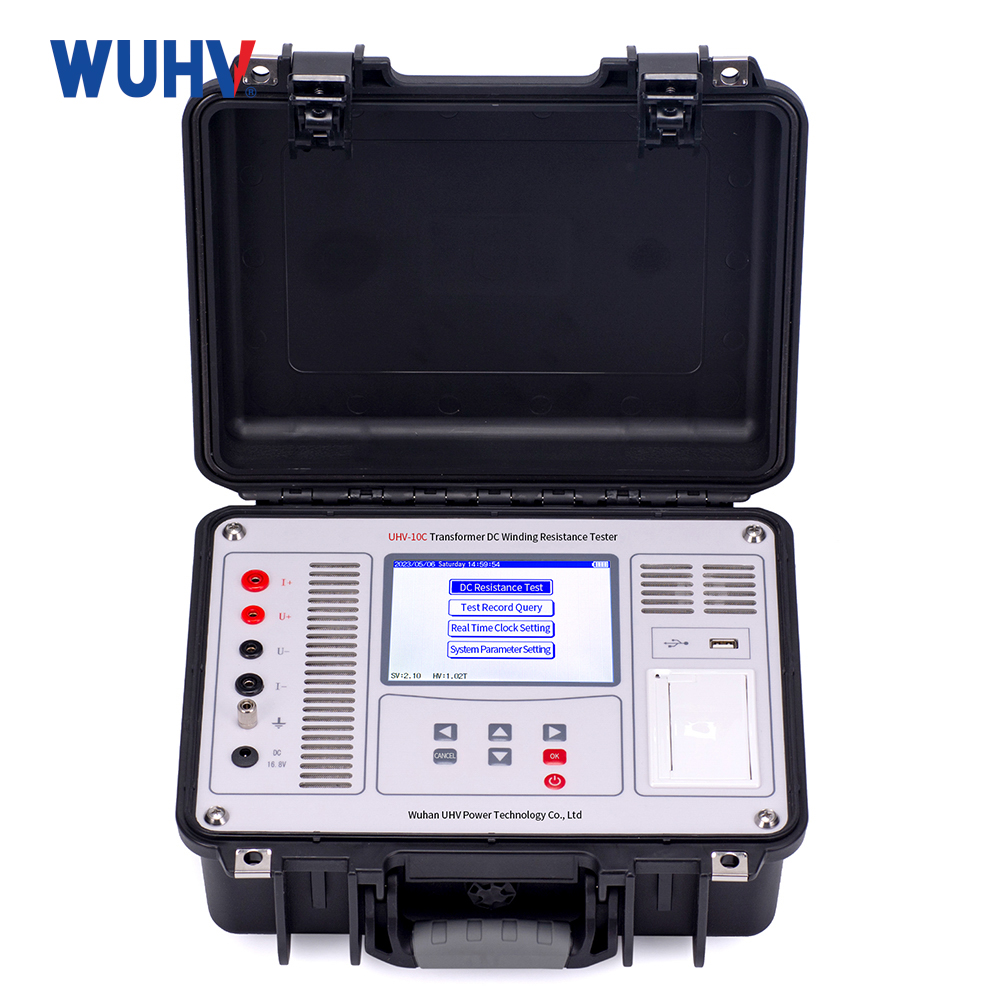
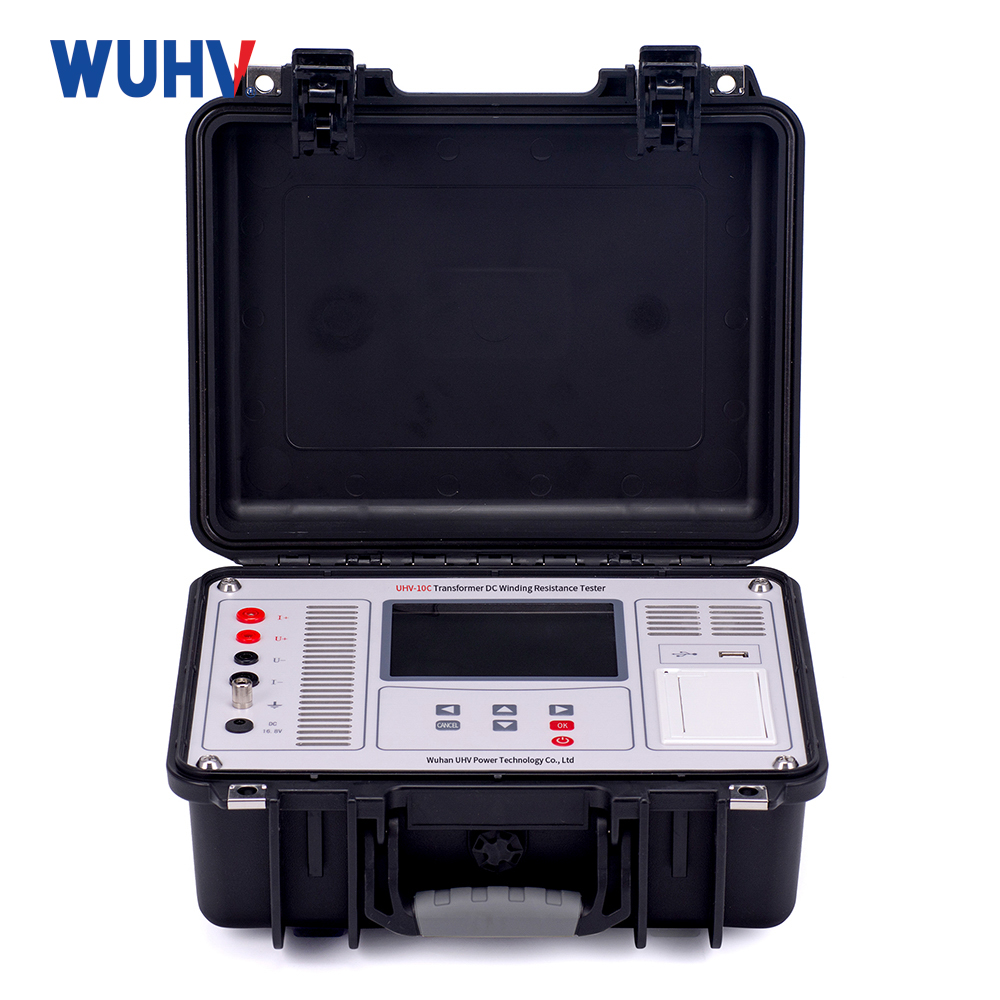
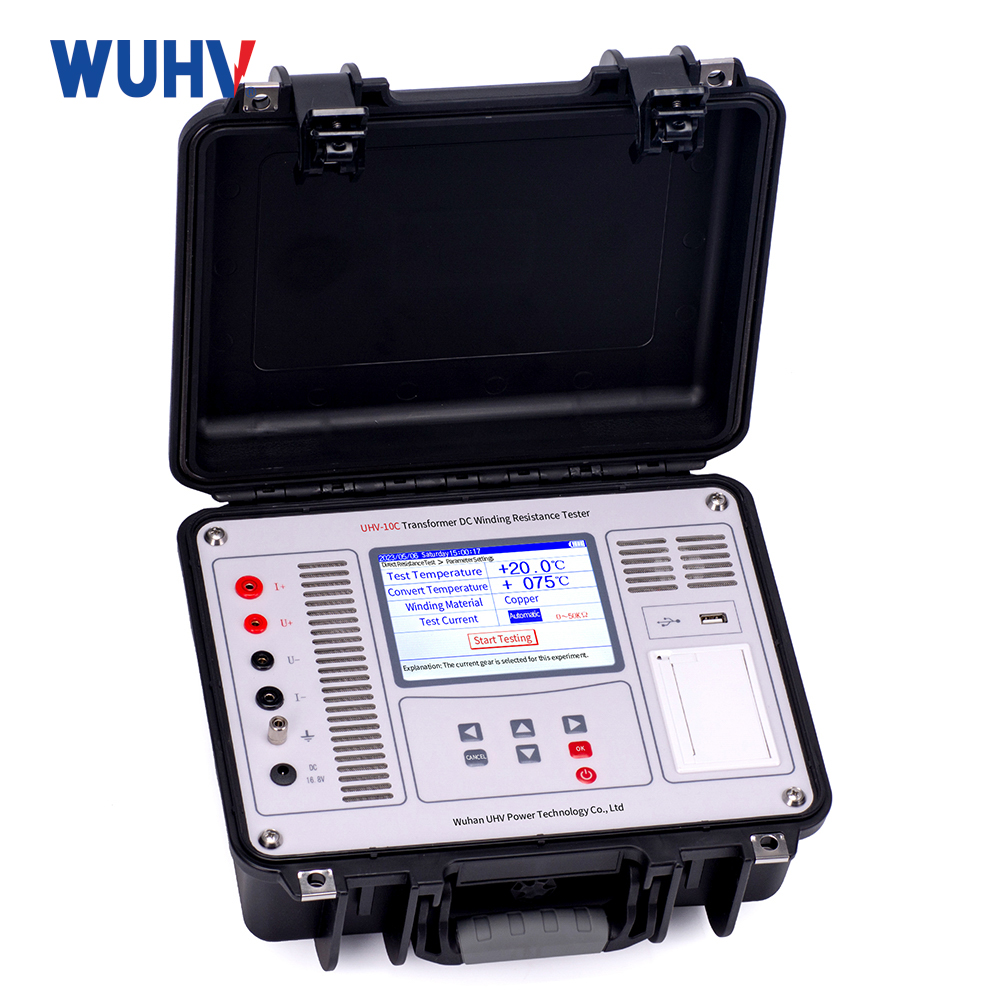
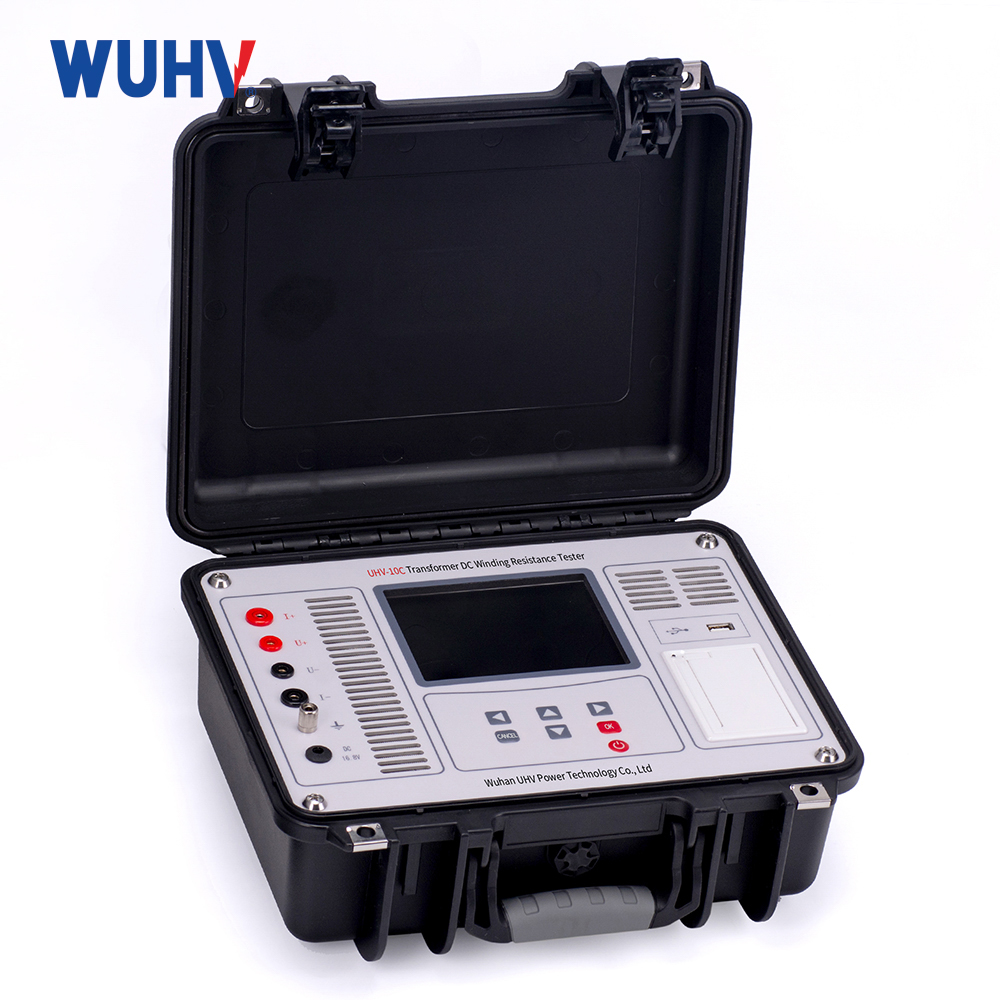
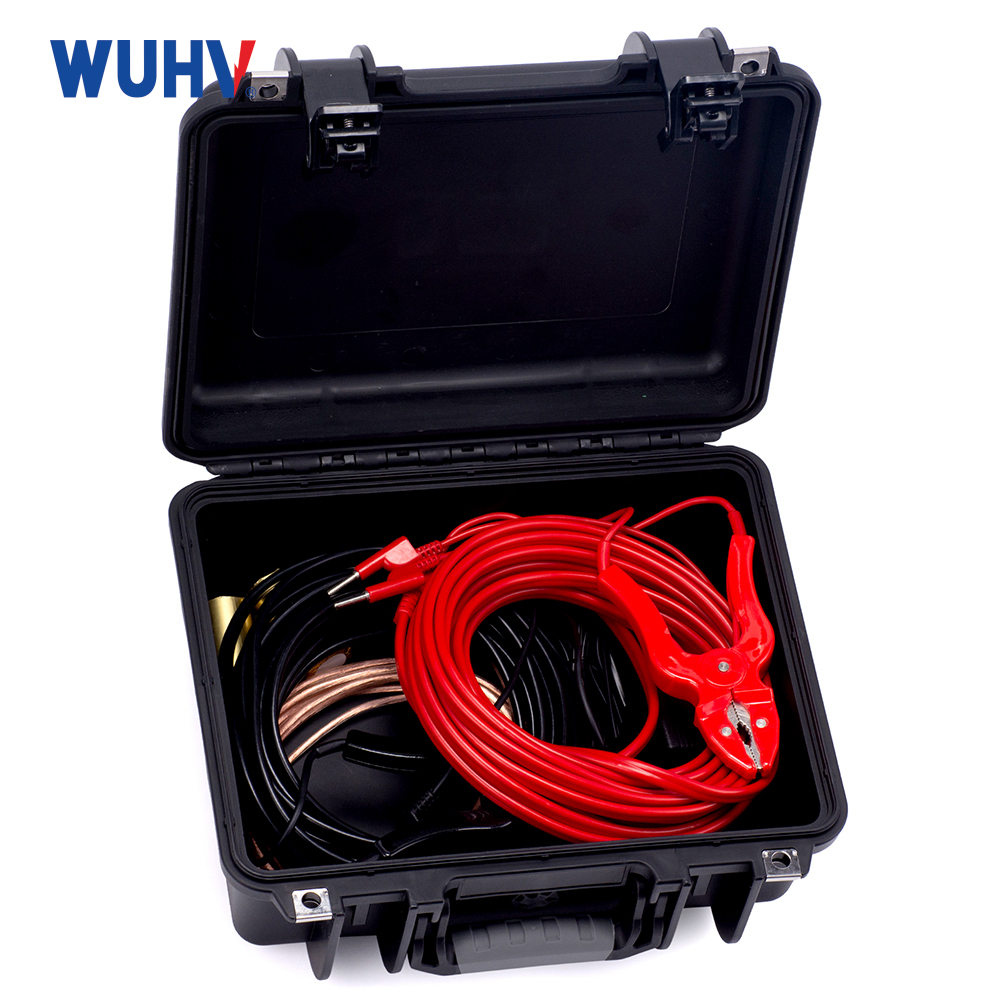


Product Introduction
DC resistance of transformer is a must-test item of semi-finished product, finished product factory test, installation, handover test and preventive test of power department in transformer manufacturing, which can effectively find manufacturing defects such as material selection, welding, loose connection parts, missing strands, broken wires and other hidden dangers after operation.
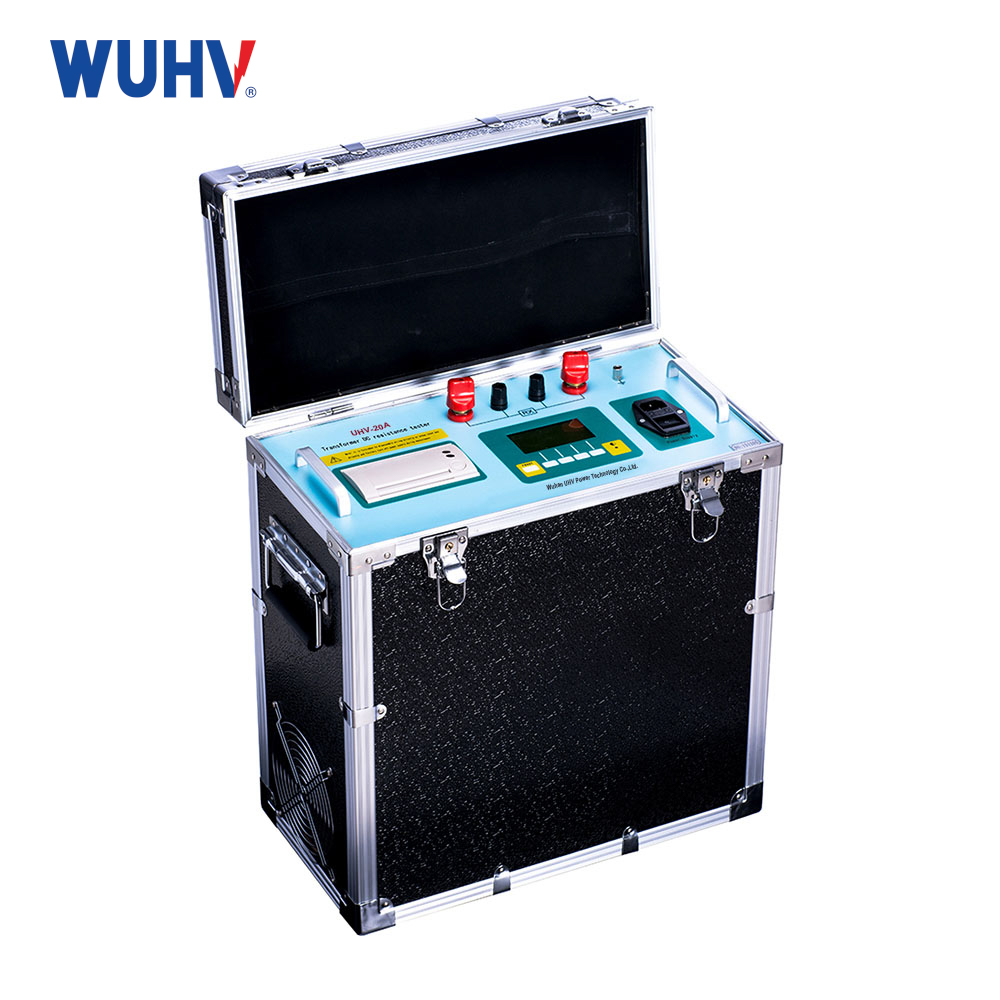
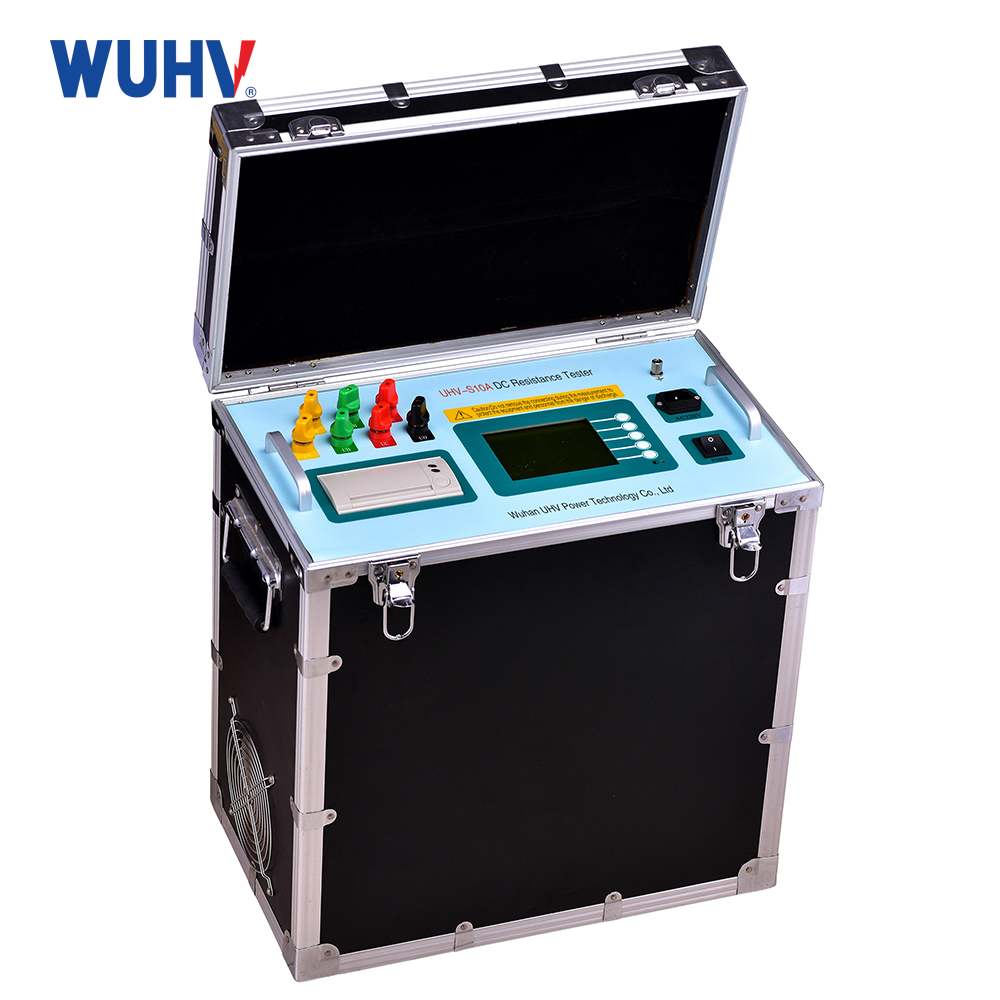
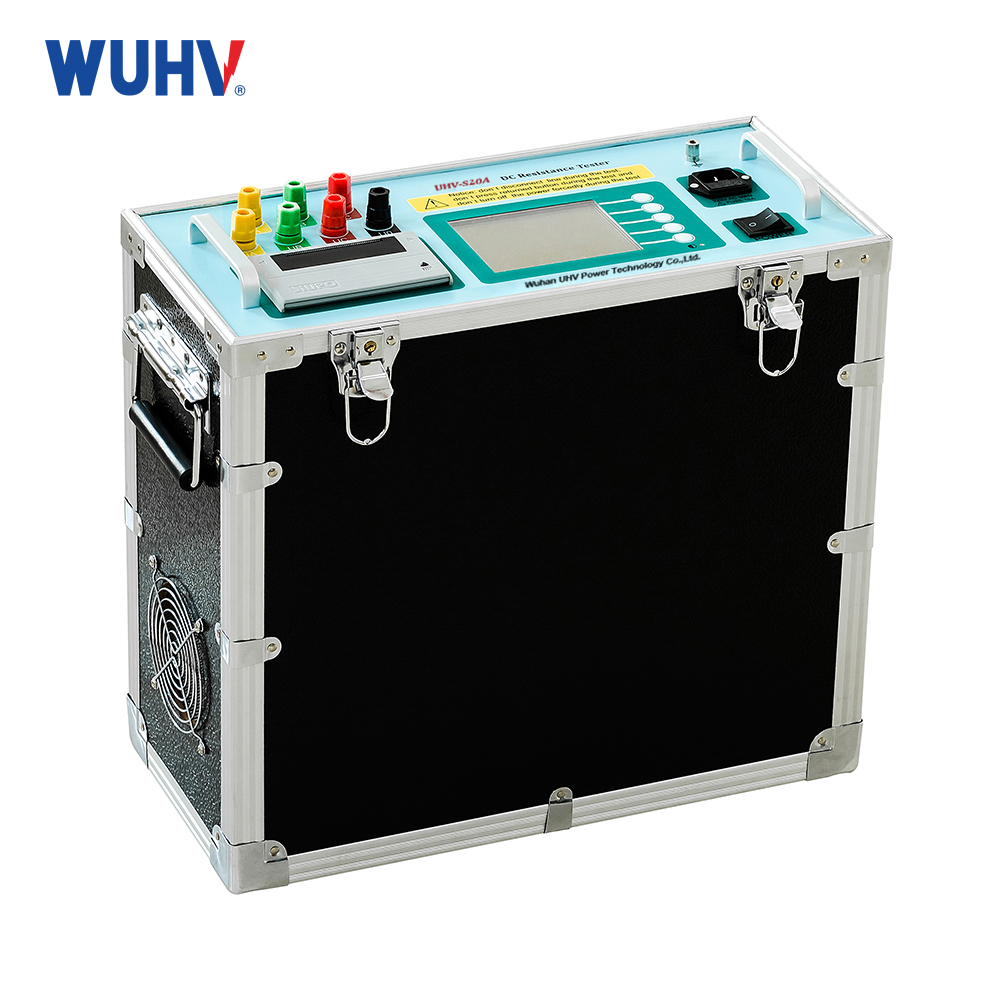
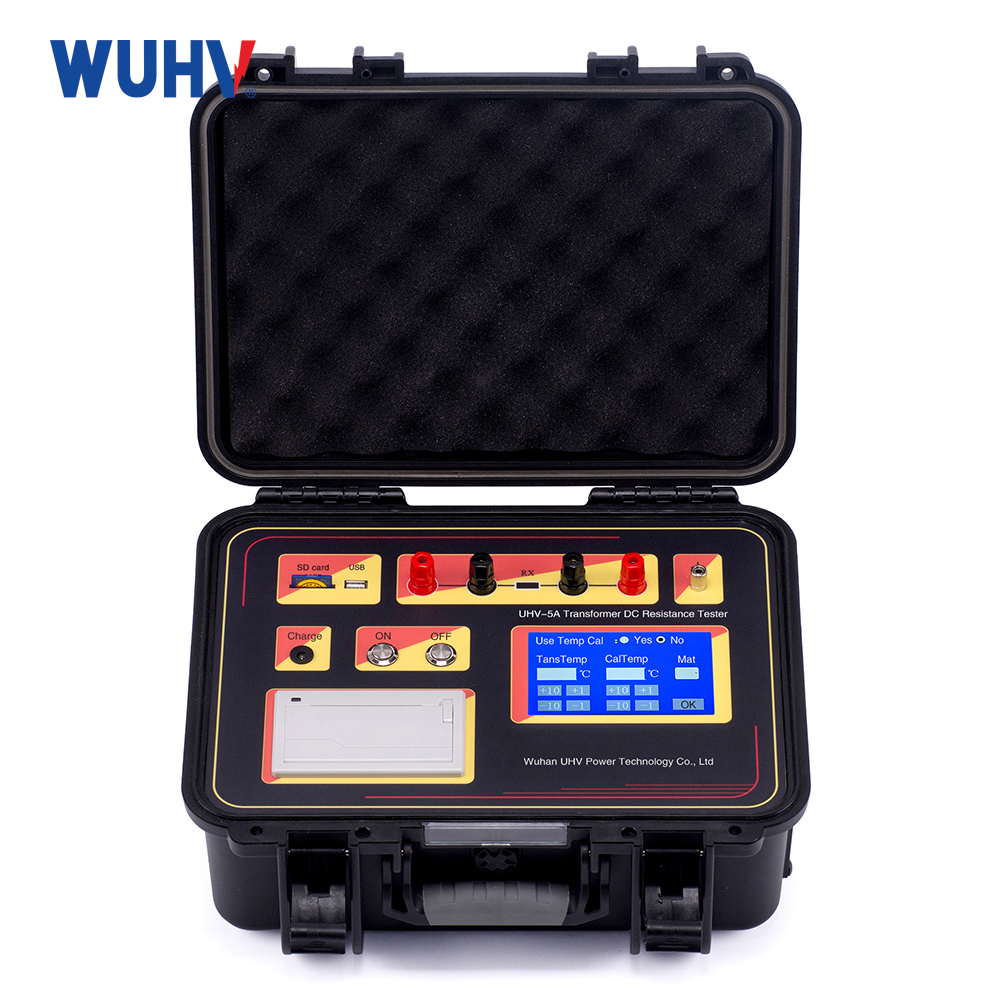
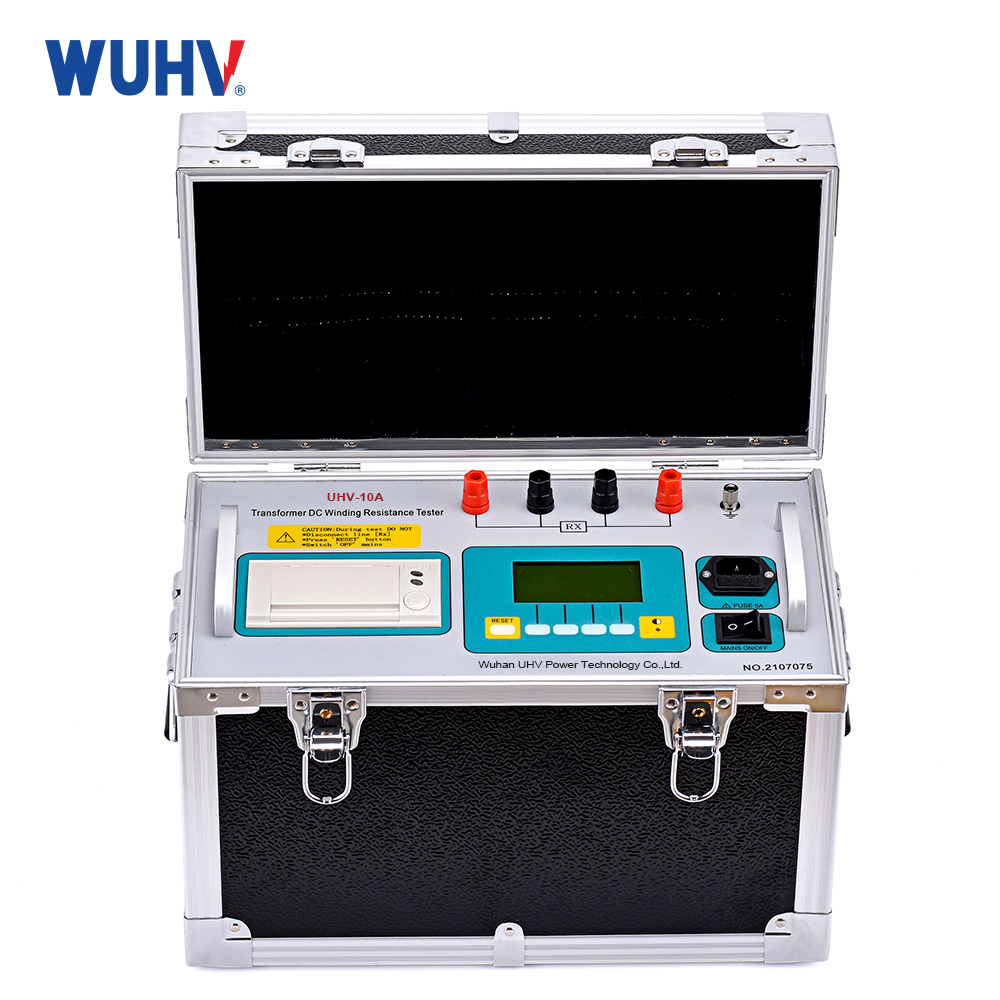
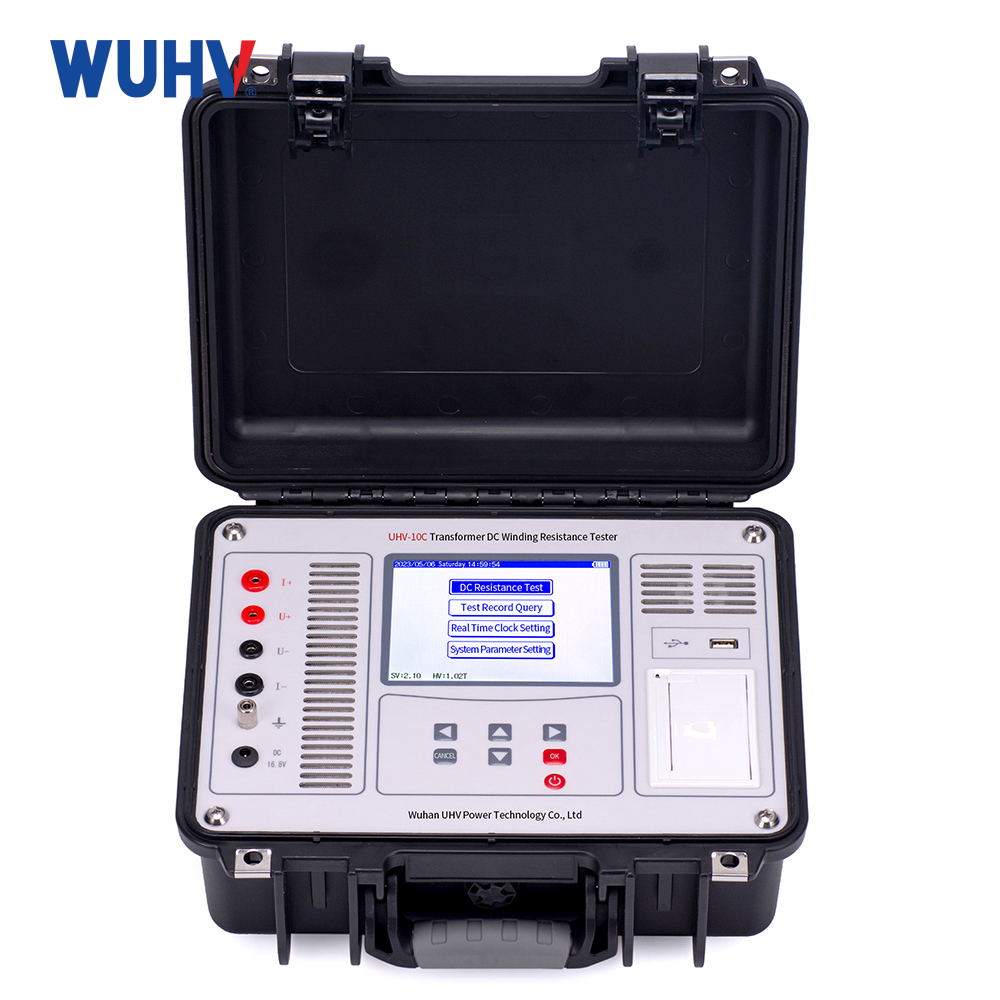
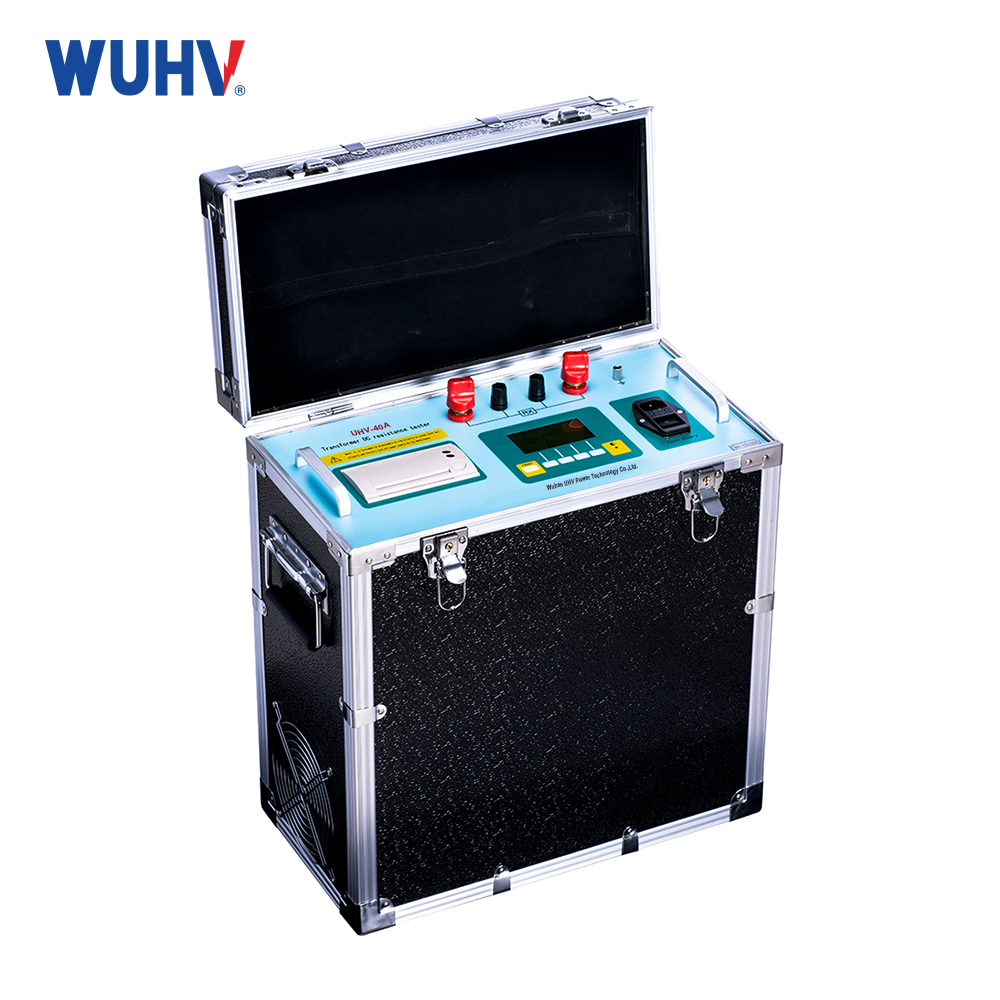
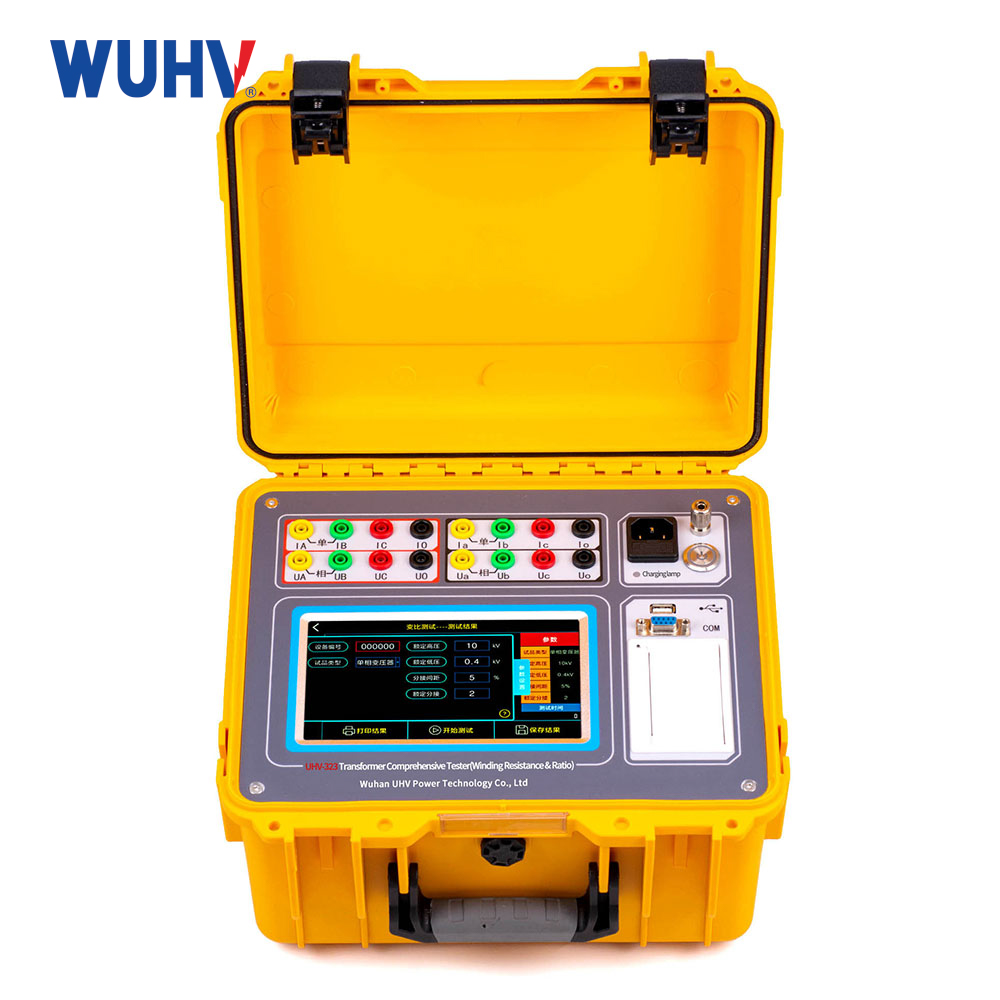
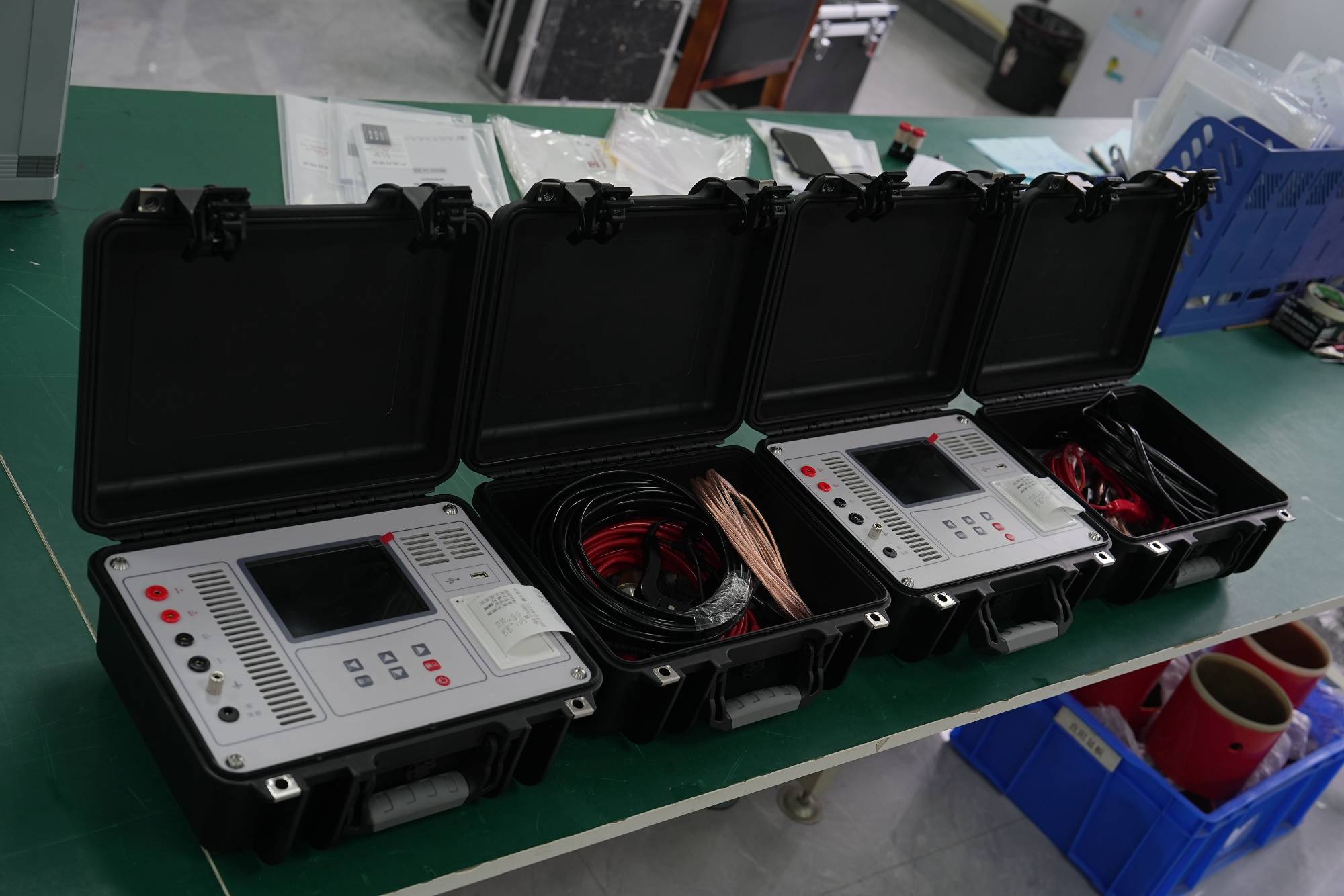
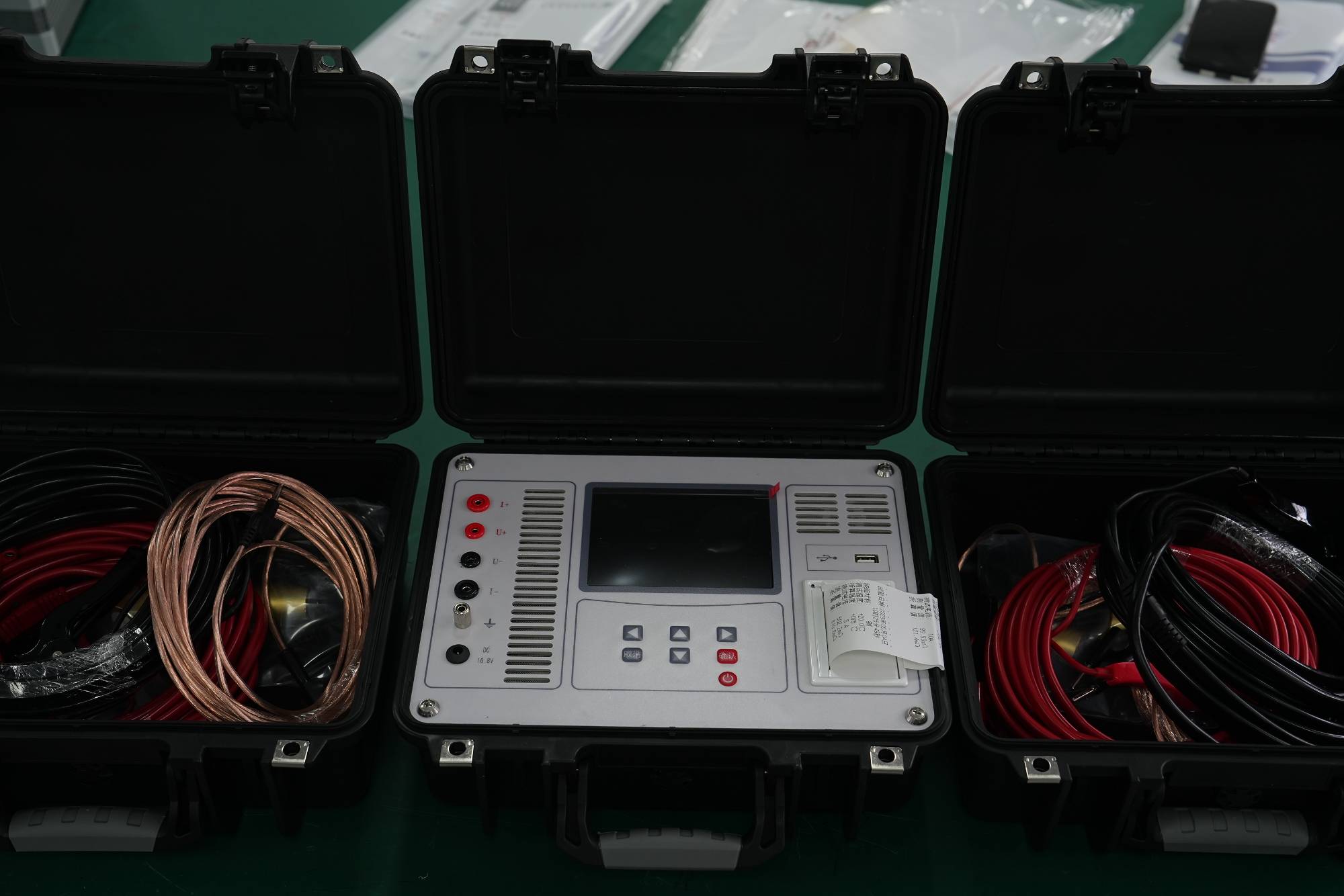
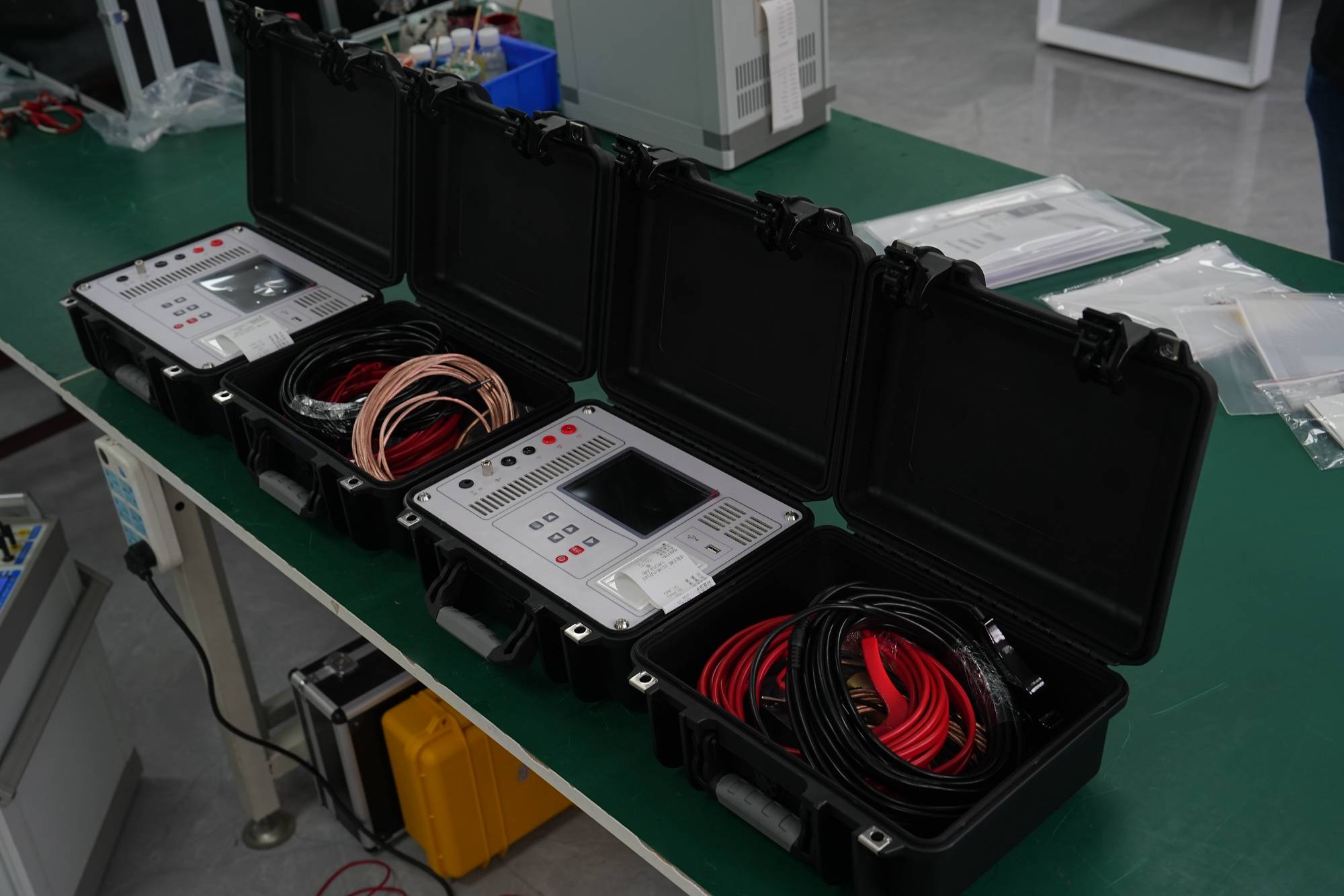
The transformer dc resistance tester manufactures is an innovative product with a built-in large-capacity lithium battery, which is small in size and easy to carry. The transformer dc resistance tester factory is not only suitable for the measurement of inductive test products such as transformers, transformers, reactors, but also suitable for the measurement of resistive test products such as copper bars, wires, switch contacts, etc. The instrument test speed is fast and the accuracy is high.
기술적인 매개변수
| Direct resistance test | |||
| Current gear | 측정 범위 | Current gear | 측정 범위 |
| 10A | 500uΩ~200mΩ | 100mA | 10Ω~200Ω |
| 5A | 10mΩ~1Ω | 10mA | 50Ω~2kΩ |
| 1A | 100mΩ~20Ω | 1mA | 500Ω~50kΩ |
| Technical index | |||
| 정확성 | ±(Reading x 0.2%+2 words) | Maximum resolution | 0.1uΩ |
| Conditions of use and appearance | |||
| 작동 전원 공급 장치 | Built-in lithium battery or external charger, charger input 100 ~ 240VAC, 50Hz/60Hz | ||
| 충전 전압 | 16.8V | 충전 전류 | ≤2A |
| 충전 시간 | About 4 hours | Service time | More than 8 hours |
| Main engine weight | 3.6kg(excluding test line) | Main engine size | 325×225×125mm3 |
| 서비스 온도 | -10℃~50℃ | 상대습도 | ≤90%, no condensation |
Product functions
1. Dual-Purpose Measurement: It is suitable for measuring inductive test objects such as transformers, reactors, and inductive loads, as well as resistive test objects such as copper bars, wires, and switch contacts.
2. Six Current Gears: It offers six current options: 10A, 5A, 1A, 100mA, 10mA, and 1mA, with measurement ranges from 500μΩ to 50kΩ.
3. High Accuracy: The measurement accuracy is ±(Reading × 0.2% + 2 digits) with a maximum resolution of 0.1μΩ .
4. Automatic Current Selection: It can automatically select the appropriate current for convenient and fast testing.
5. Resistance Temperature Conversion: It includes a resistance temperature conversion function, allowing users to convert measured resistance to a reference temperature.
6. Built-in Lithium Battery: The dc resistance tester features a built-in large-capacity lithium battery, providing more than 8 hours of service time on a single charge (about 4 hours charging time). It can also operate on 220V AC power.
7. Data Management: It has a 5.6-inch large industrial high-brightness color LCD screen visible in strong sunlight, local storage and flash drive storage, and an external printer for data printing.
8. Comprehensive Protection: It includes multiple protection functions such as anti-electromotive force protection, break line protection, power failure protection, and overheating alarm.
 |  |  |
제품 특징
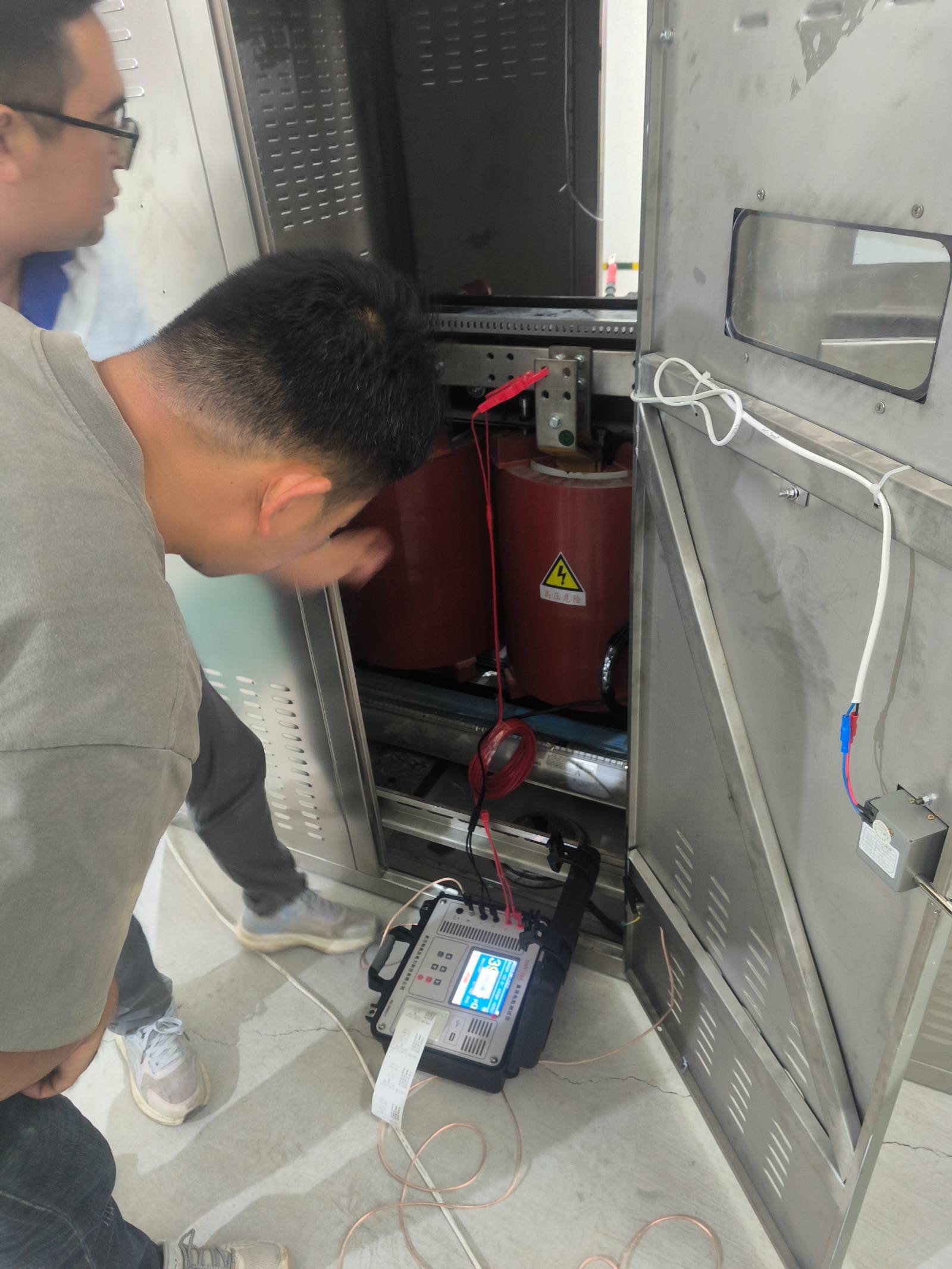
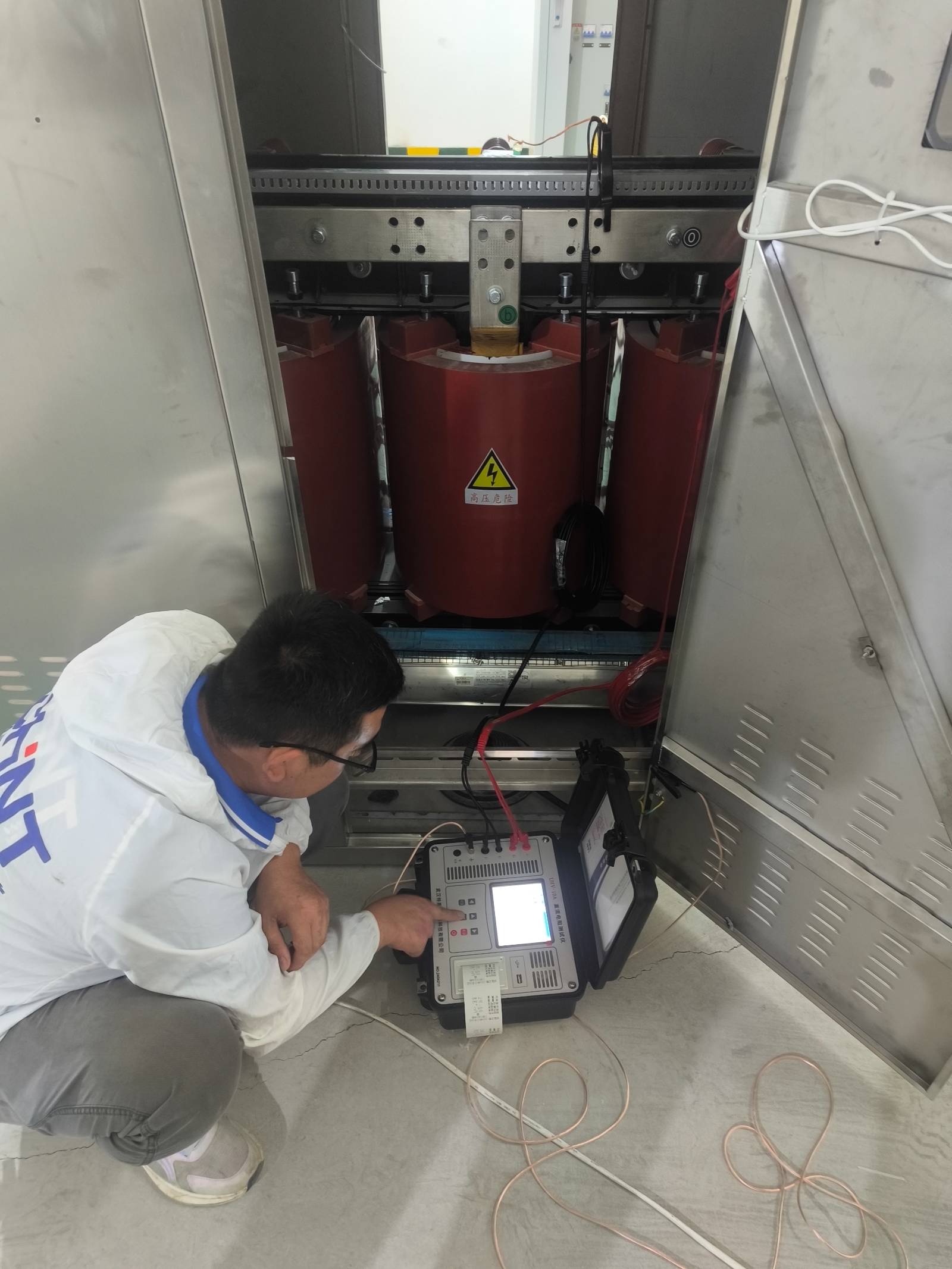
1. Lithium battery power supply or 220V AC power supply adaptive, one charge, can continuously carry out hundreds of transformer DC resistance test, the test process is simple and convenient.
2. Output six current, maximum output 10A current, maximum output 25V voltage, and can automatically select the current, convenient and fast.
3. Wide range, high precision, 500uΩ ~ 50kΩ.
4. With resistance temperature conversion function.
5. It has a variety of protection functions such as anti-electromotive force protection, break line protection, power failure protection, overheating alarm and so on.
6. 5.6 inch large industrial high brightness color LCD screen, the display is still clearly visible in strong sunlight.
7. Equipped with external printer for easy data printing.
8. Has local storage and flash drive storage.
Product Advantages
1. High precision: The dc resistance tester factory adopts advanced measurement technology and manufacturing processes, such as the four wire method, which can effectively eliminate line resistance interference and improve measurement accuracy.
2. Quick measurement: The transformer dc resistance tester supplier is equipped with a programmable constant current source inside, which uses a larger current for testing, improving its anti sensing and anti-interference capabilities and greatly reducing testing time.
3. Automation and Intelligence: The dc resistance tester manufacturer has the characteristics of automation and intelligence, such as automatic identification of equipment types, automatic selection of suitable testing methods, automatic completion of data recording and processing, etc., which improves measurement efficiency and accuracy.
4. Multifunctionality: In addition to basic measurement functions, it also has multiple functions such as calculation, printing, data storage, and export, realizing one machine for multiple purposes and meeting different testing needs.
5. Portability: The dc resistance tester is compact in size and lightweight, making it easy to carry to the site for testing, especially suitable for use in substations, transmission lines, and other places.
6. Stable and reliable: The transformer dc resistance tester manufactures has stable and reliable performance, complete protection circuit, and can effectively ensure the efficiency and stability of measurement.
7. Wide measurement range: capable of measuring a wide range of resistance, ranging from micro ohms to thousands of ohms, suitable for testing various electrical equipment.
Application Scenarios
1. Transformer Manufacturing: Used for factory acceptance testing to detect manufacturing defects such as material selection issues, welding problems, loose connections, missing strands, and broken wires.
2. Substation Commissioning: Essential for testing and verifying transformer windings during commissioning of new substations or after major installation work.
3. Routine Maintenance and Preventive Testing: Used by utilities for periodic testing to detect early signs of winding degradation, connection problems, or tap changer issues.
4. Fault Diagnosis: Deployed after a transformer experiences a short-circuit fault to assess winding condition and determine if the transformer can be safely returned to service.
5. Resistive Object Testing: Suitable for measuring resistance of copper bars, wires, switch contacts, and other resistive test objects.
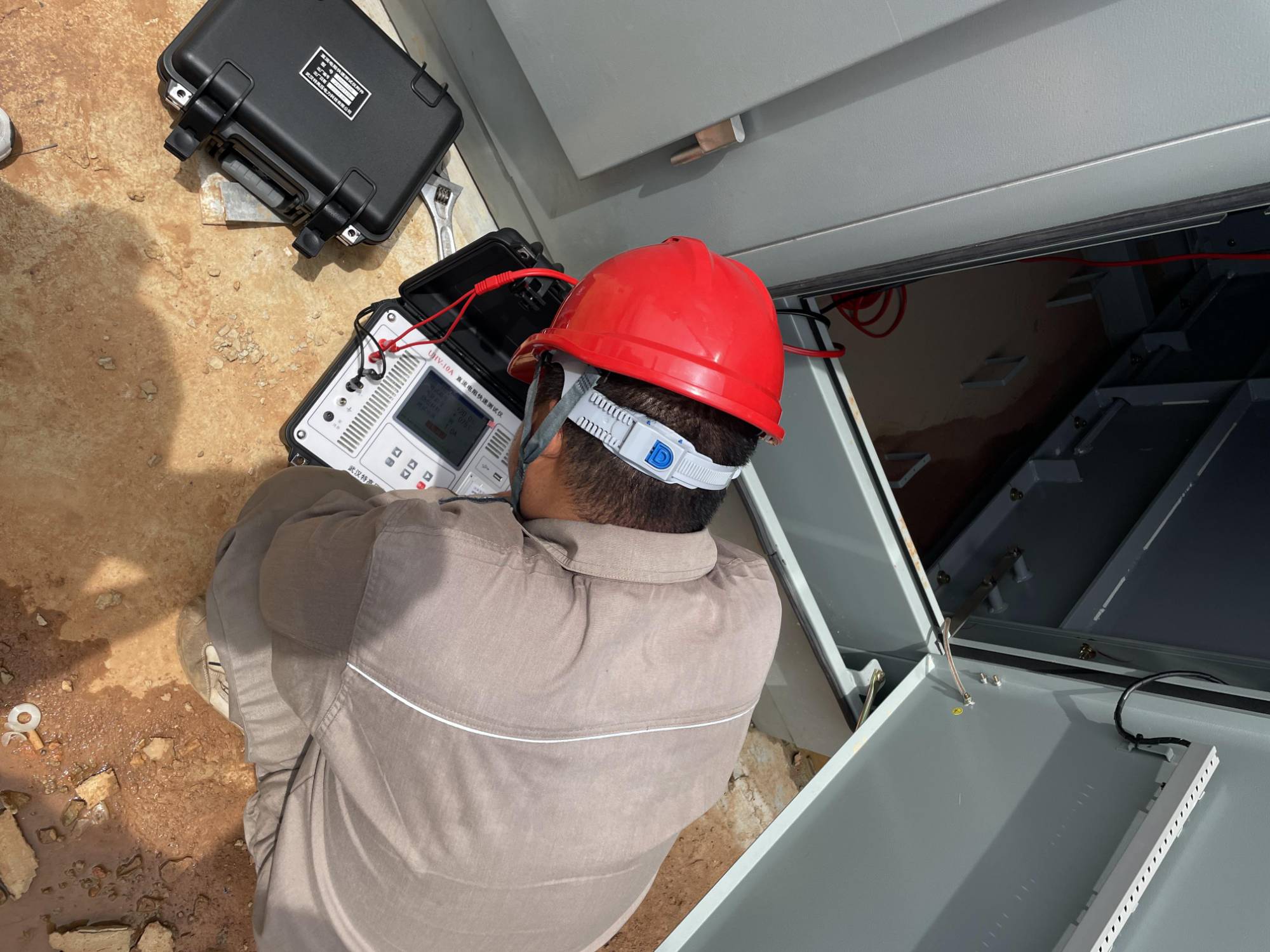
6. On-Site Field Testing: The built-in battery and compact design make it suitable for field testing in substations and remote locations.
 |  |  |
Frequently Asked Questions (FAQ)
Q1: What is the typical measurement range of a DC resistance tester?
A1: The measurement range of the DC resistance tester is very wide, and according to different models, it can measure resistance from micro ohms to megaohms.
Q2: Why is it necessary to discharge before measurement?
A2: The tested equipment may carry residual charges. Discharging before testing can avoid danger to the instrument and personnel, while ensuring the accuracy of the measurement data.
Q3: What is the difference between a DC resistance rapid tester and an AC resistance tester?
A3: The dc resistance tester is mainly used to measure the DC resistance of conductive circuits, while the AC resistance tester is used to measure the impedance in AC circuits. The measurement principles and application scenarios of the two are different.
Q4: What should I do if there is an abnormality in the measurement results?
A4: If the measurement result is abnormal, first check whether the connecting wire is firm, whether the measuring point is clean, and whether there is obvious damage to the equipment. If necessary, contact professional technicians or Wuhan UHV Power Technology Co., Ltd. for consultation.
Q5: How to improve the accuracy of DC resistance measurement?
A5: Choosing high-precision testing instruments, standardizing operating procedures, paying attention to the impact of temperature changes, and ensuring good contact of measurement points are all key to improving measurement accuracy.
The UHV-10C Transformer DC Winding Resistance Tester supplier is a high-precision and portable solution designed for accurate DC resistance measurement of transformer windings and other low-resistance electrical components. As an experienced manufacturer and supplier of electrical testing equipment, we offer reliable products, professional technical support, and competitive prices for customers worldwide. With multiple test current ranges, automatic ranging, temperature conversion, built-in lithium battery, data storage, USB data export, and comprehensive safety protection, the UHV-10C delivers fast, accurate, and convenient testing for transformer manufacturers, power utilities, electrical contractors, and maintenance professionals.