Product introduction
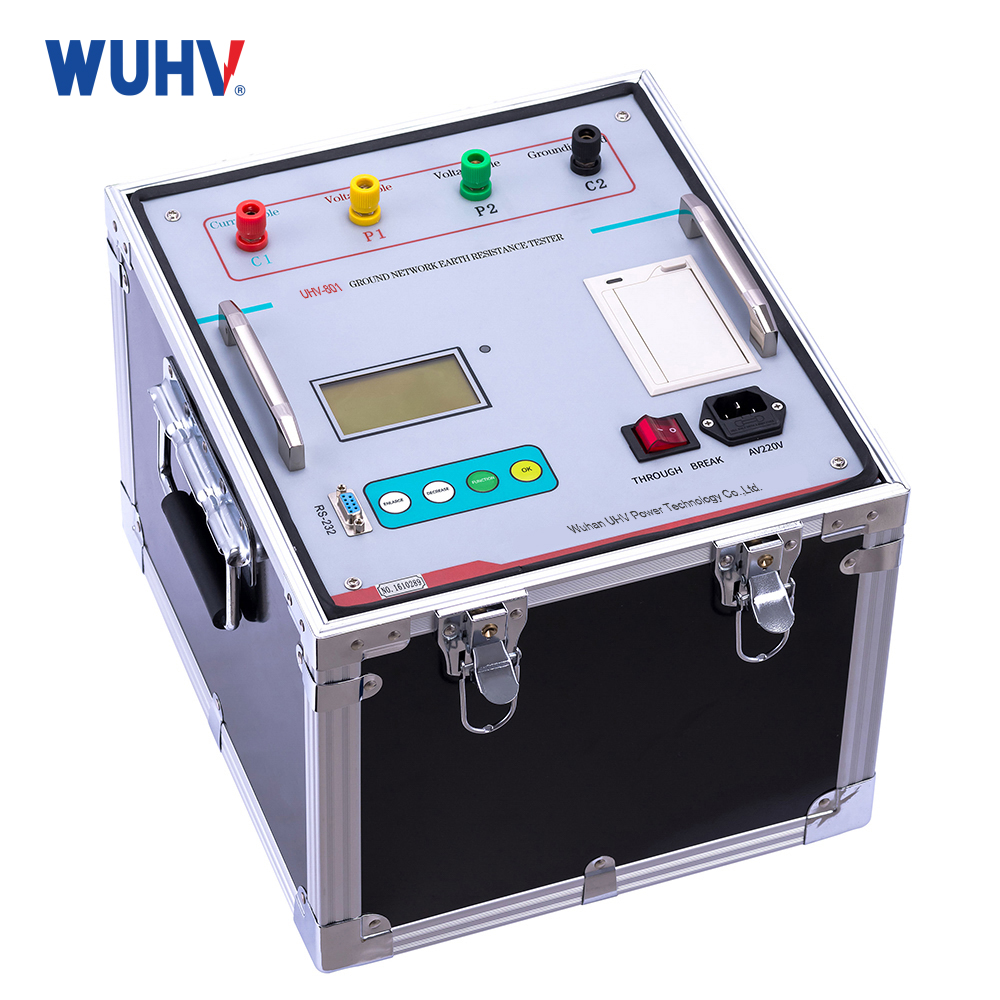
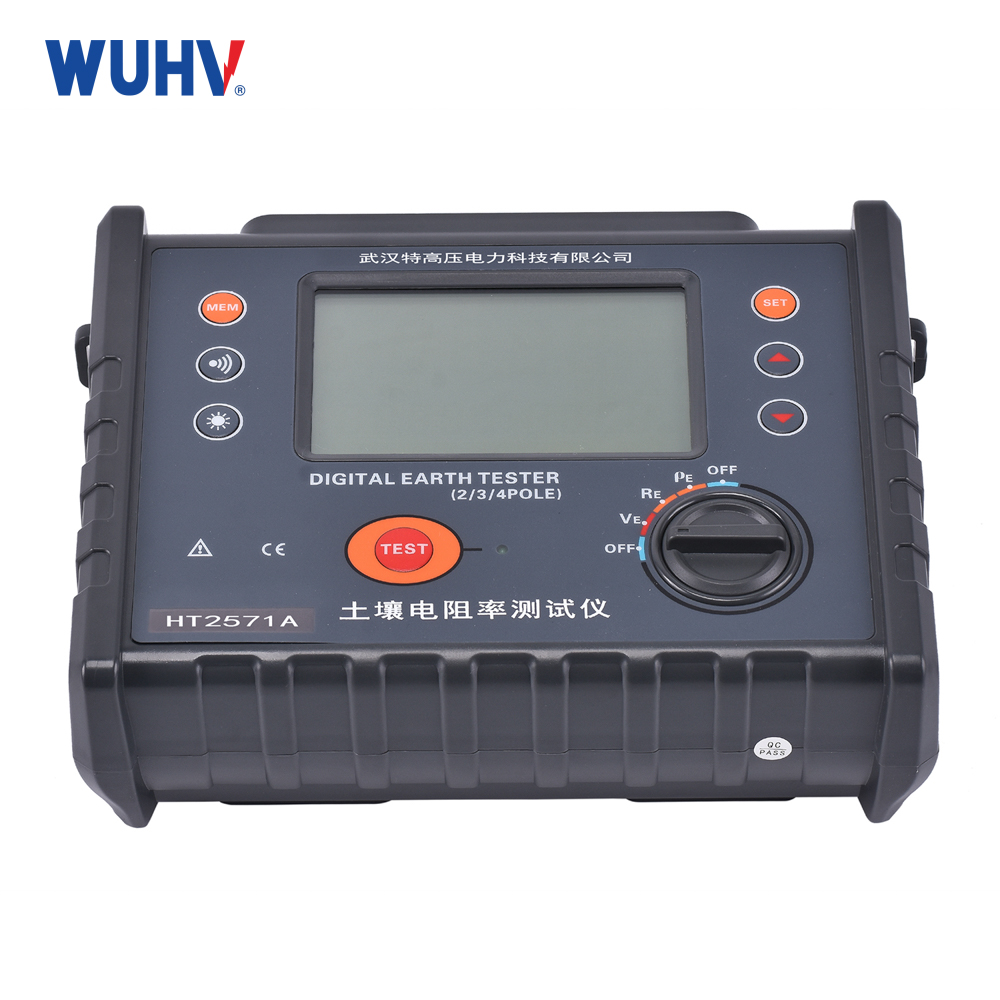
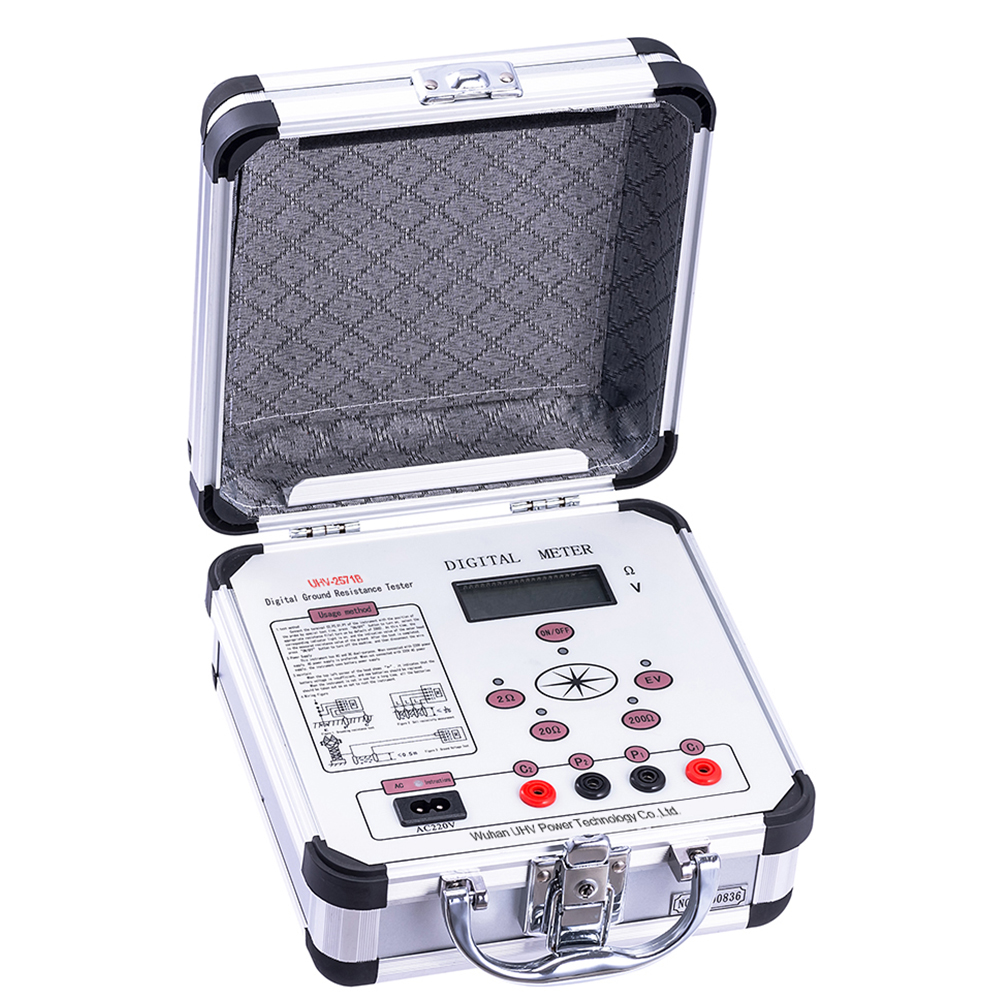
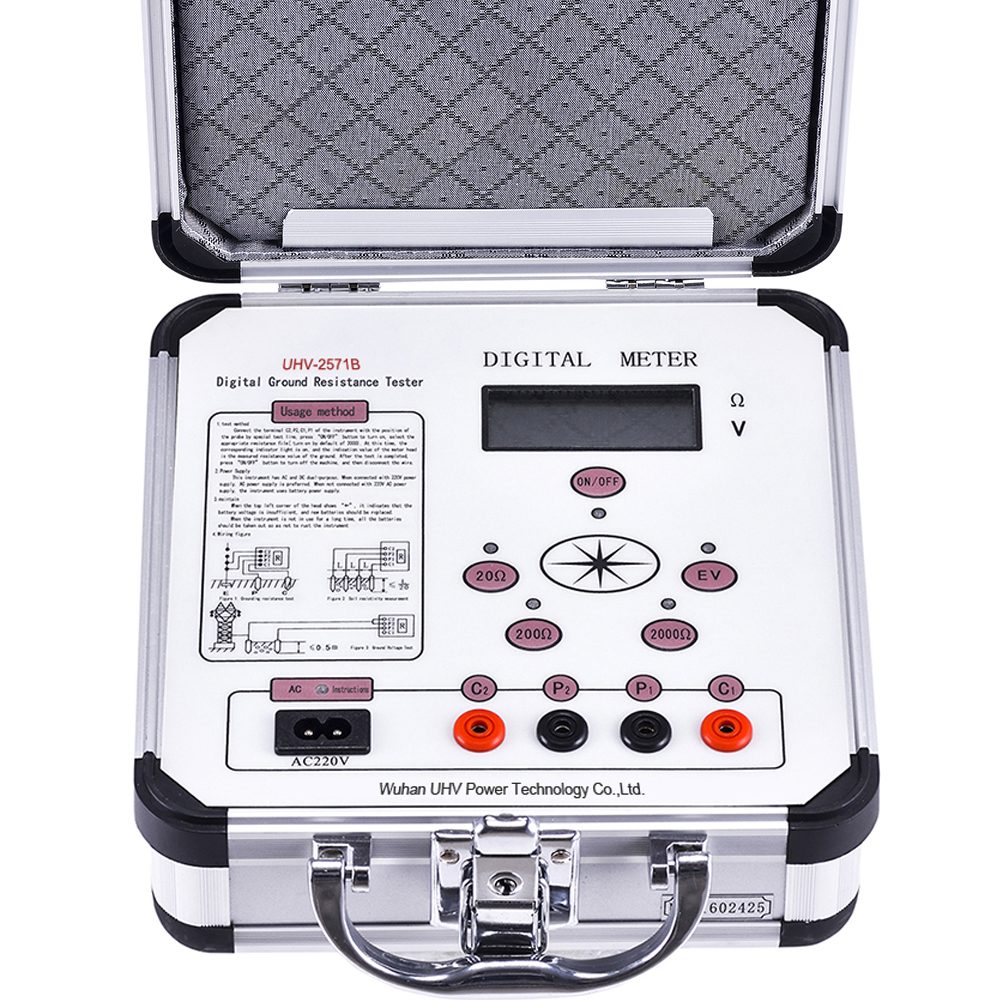
The UHV-2571B is a professional soil resistivity tester and ground resistance meter designed for soil resistivity, grounding resistance, low resistance, and AC grounding voltage testing. It uses a four-wire measurement method and interference suppression technology for reliable field testing in substations, grounding grids, transmission and distribution systems, communication base stations, and industrial facilities.
피roduct functions
Ground resistance testing: Accurately measures the ground resistance of grounding electrodes and grounding systems to determine whether grounding performance meets requirements.
Soil resistivity testing: Uses the four-wire method to measure soil resistivity, providing data basis for grounding grid design and grounding engineering construction.
Low resistance testing: Measures the resistance of grounding conductors, metal conductors, and connection points to check whether connections are reliable.
AC grounding voltage testing: Detects the AC voltage of the on-site grounding system, assisting in evaluating the grounding environment and interference conditions.
Anti-interference testing: Features power frequency and radio frequency interference suppression capability, suitable for complex on-site environments such as substations, distribution rooms, and grounding grids.
Four-wire precision measurement: Reduces the influence of test leads and contact resistance on measurement results, improving the accuracy of ground resistance and soil resistivity testing.
 |  |
특징
1 고강도 알루미늄 합금 쉘 본체, 위상 고정 루프 및 스위치드 커패시터 필터가 장착된 회로, 이를 기반으로 기기가 전력 주파수 및 무선 주파수 간섭을 차폐하는 데 효과적인 역할을 합니다.
2 DC/AC 변환기는 측정을 위해 DC 전류를 AC 저주파 정전류로 변환할 수 있습니다.
3 Auxiliary grounding resistance can change in the range of 0 ~ 2KΩ (RC), 0 ~ 40KΩ (RP), that will not affect measurement results.
4 Without manual adjustment to zero, with three and a half bits LED display, the instrument can be used for measuring the grounding resistance, the conductor resistance of low resistance, soil resistivity and AC ground voltage. If tested loop encounter failure, the screen displays "1" indicating large range, which consistent with conventional measurement practices.
15. 테스트 정확도를 보장하기 위해 배터리 저전압에 대한 지능형 프롬프트.
16. 작은 크기와 가벼운 무게.
기술적인 매개변수
| 근무 조건 | 주변 온도 | 0℃~+45℃ |
| 상대습도 | 85%RH 이하 | |
Measurement range and constant current value (effective value) | 저항 | 0~20Ω(10mA),2~200Ω(1mA),20~2000Ω(0.1mA) |
| 전압 | AC0~19.99V | |
| 측정 정확도 및 분해능 | Precision rowspan | 0~0.2Ω≤±3%±1d |
| 0.2Ω~1999.9Ω≤±1.5%±1d | ||
| 1~19.99V≤±3%±1d | ||
| 해결 | 0.01Ω、0.1Ω、1Ω、0.01V | |
보조로 인한 측정 오류 접지 저항 및 접지 전압 | 보조접지저항 허용 | RC(between C1 and C2) |
| 0~20Ω≤1kΩ | ||
| 20~2000Ω≤2kΩ | ||
| RP(between P1 and P2) < 40kΩ, Error≤±5% | ||
허용 접지 전압(유효 전원 주파수 값) | ≤5V, Error≤±5% | |
| 전력 및 전력 소비 | 최대 전력 손실 | 2W 이하 |
| DC | 8 × 1.5V (AA, R6) battery | |
| 교류 | 220V/50Hz | |
| volume and weight | 치수 | 220×200×105mm3 |
| 무게 | 1.4kg 이하 |
N별명: 토양 저항력 시험기; 토양 저항 측정기
Application Scenarios
Substations: Testing the performance of substation grounding grids and grounding systems.
Transmission and distribution lines: Testing the grounding resistance of transmission towers and distribution equipment.
Power equipment grounding: Testing the grounding condition of transformers, switchgear, and other equipment.
Building grounding systems: Testing lightning protection grounding, protective grounding, and other building grounding systems.
Communication base stations: Testing the grounding resistance and grounding system performance of communication base stations.
Grounding grid construction and acceptance: Measuring soil resistivity to provide a basis for grounding grid design, construction, and acceptance.
Lightning protection grounding testing: Testing lightning rods, surge arresters, and lightning protection grounding devices.
Industrial sites: Testing the grounding condition of factory equipment, distribution systems, and large machinery.
Grounding system maintenance: Used for periodic inspections to identify abnormal ground resistance or grounding connection issues.
Frequently Asked Questions
Q: Why is it necessary to measure soil resistivity before grounding grid design?
A: Soil resistivity is important basic data for grounding grid design, helping to determine the arrangement of grounding electrodes and the grounding scheme.
Q: Can it be used for newly built grounding systems?
A: Yes. It can be used for soil resistivity testing before construction, during construction inspection, and for ground resistance acceptance testing after completion.
Q: What is the biggest feature of this device?
A: It combines ground resistance and soil resistivity testing in a single device, while also supporting low resistance and AC grounding voltage testing.
Q:Why is soil resistivity important for grounding system design?
A:Soil resistivity is an important factor when designing a grounding system because it affects grounding electrode performance and the overall resistance of the grounding network. Accurate soil resistivity measurement helps engineers select an appropriate grounding method and design.
As an experienced manufacturer and supplier, we provide competitive factory-direct price, OEM/ODM service, technical support, calibration certification, and professional after-sales service. If you are looking for a reliable soil resistivity tester supplier or need the latest soil resistivity tester price, please contact us for a quotation and detailed technical information.