Product Introduction
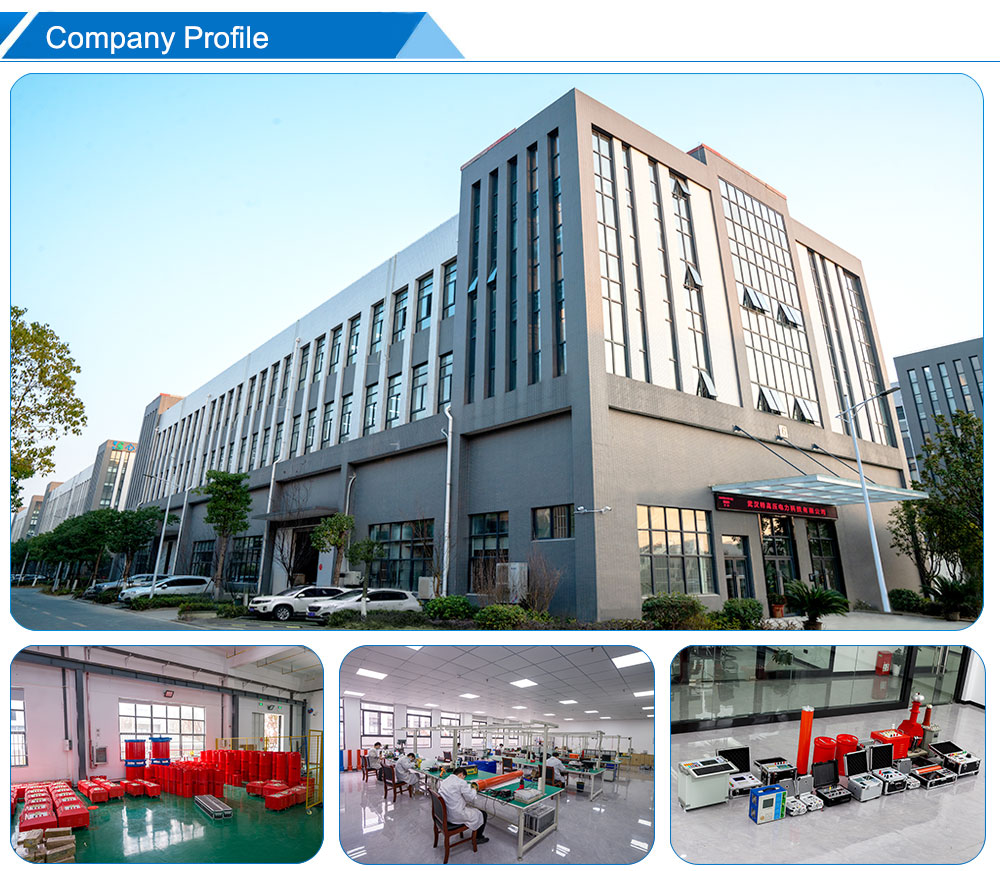
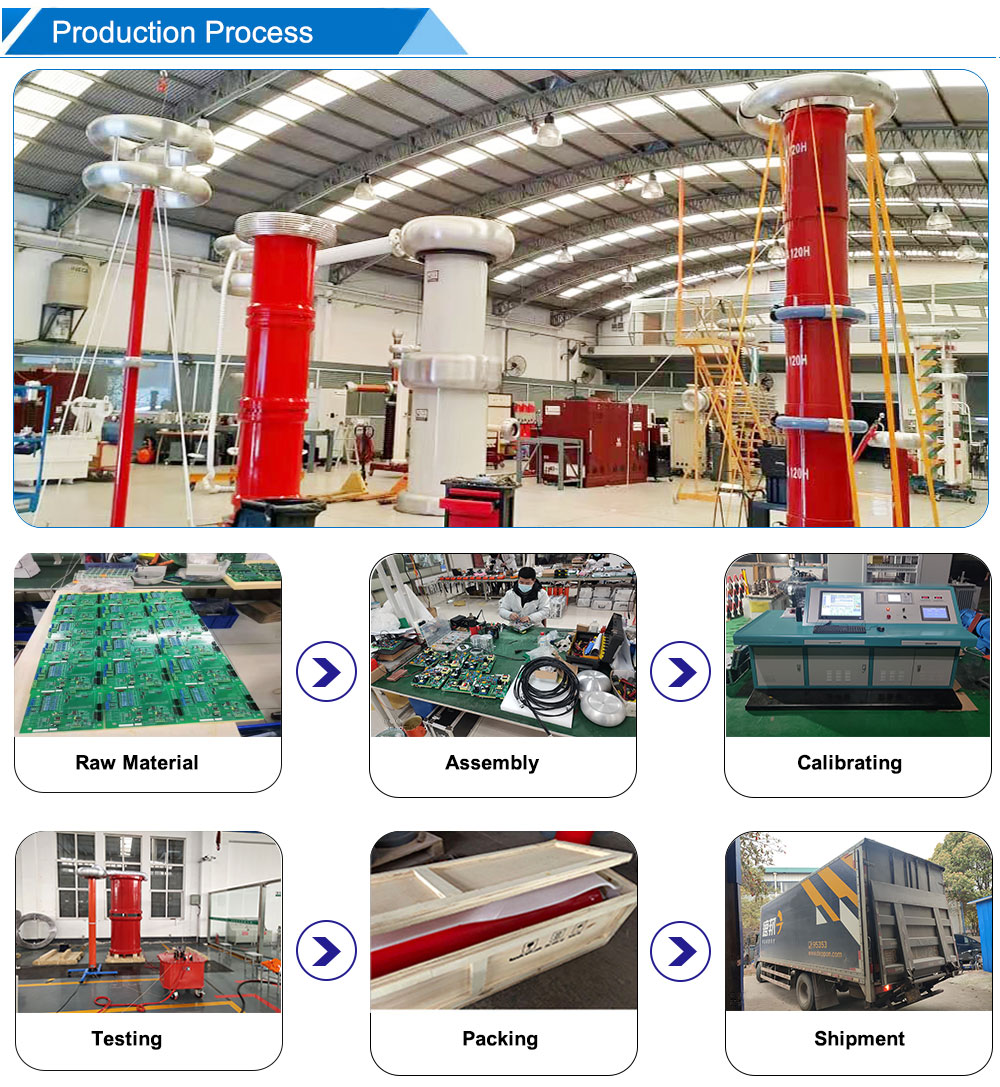
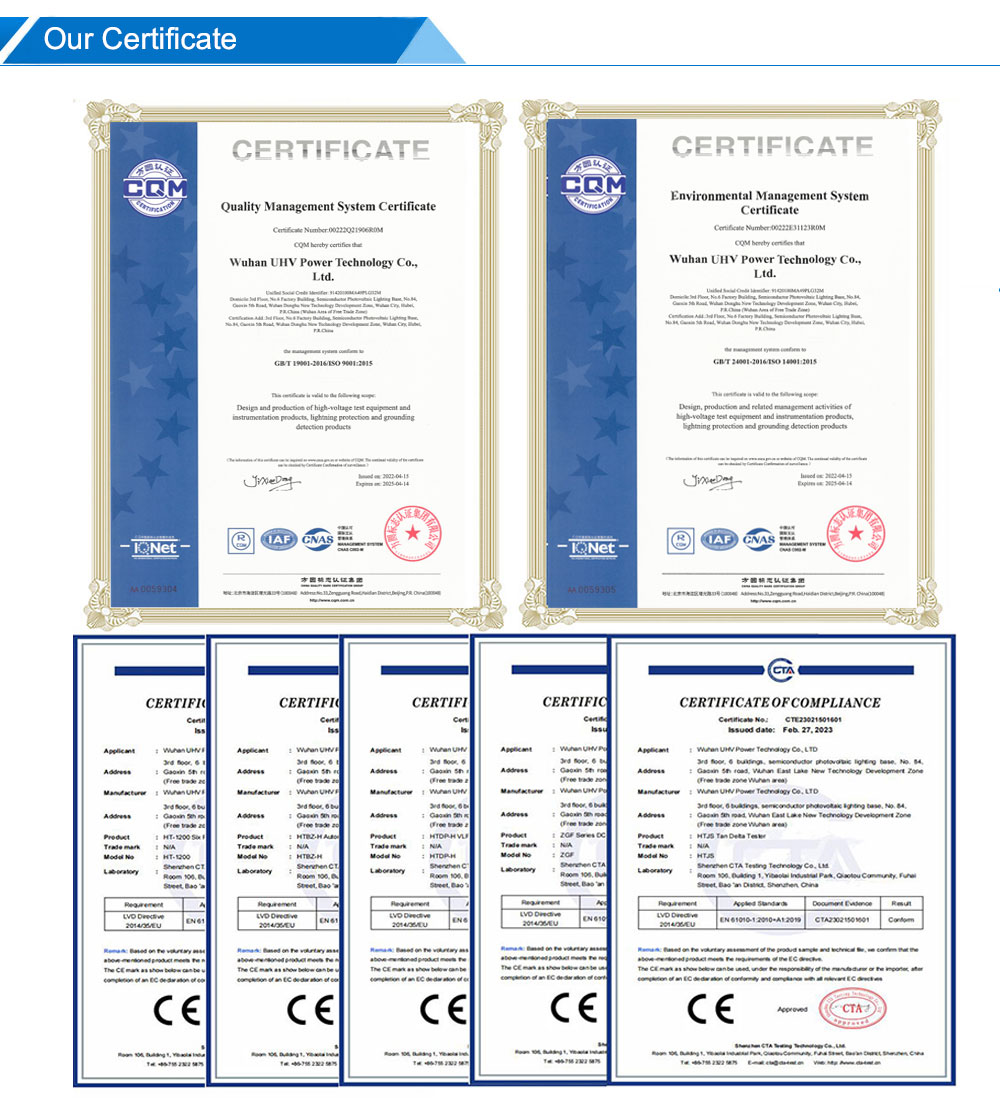
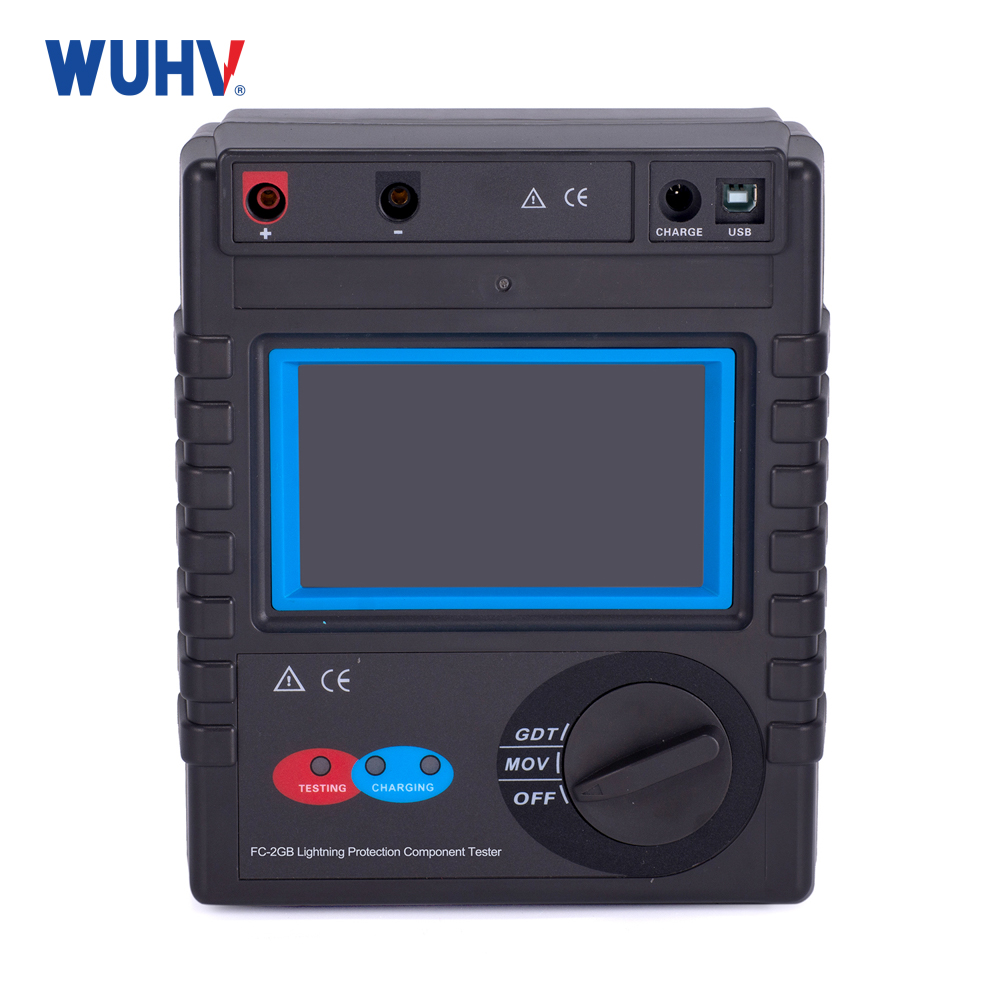
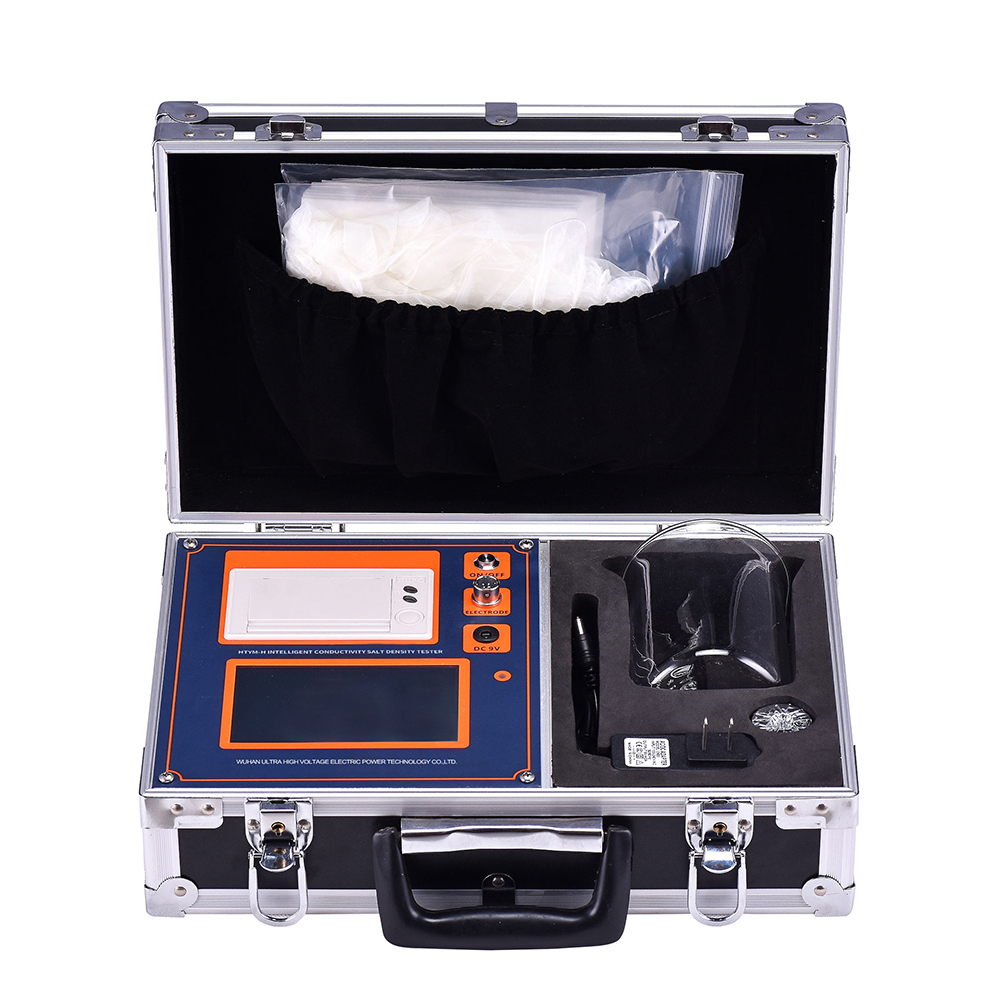
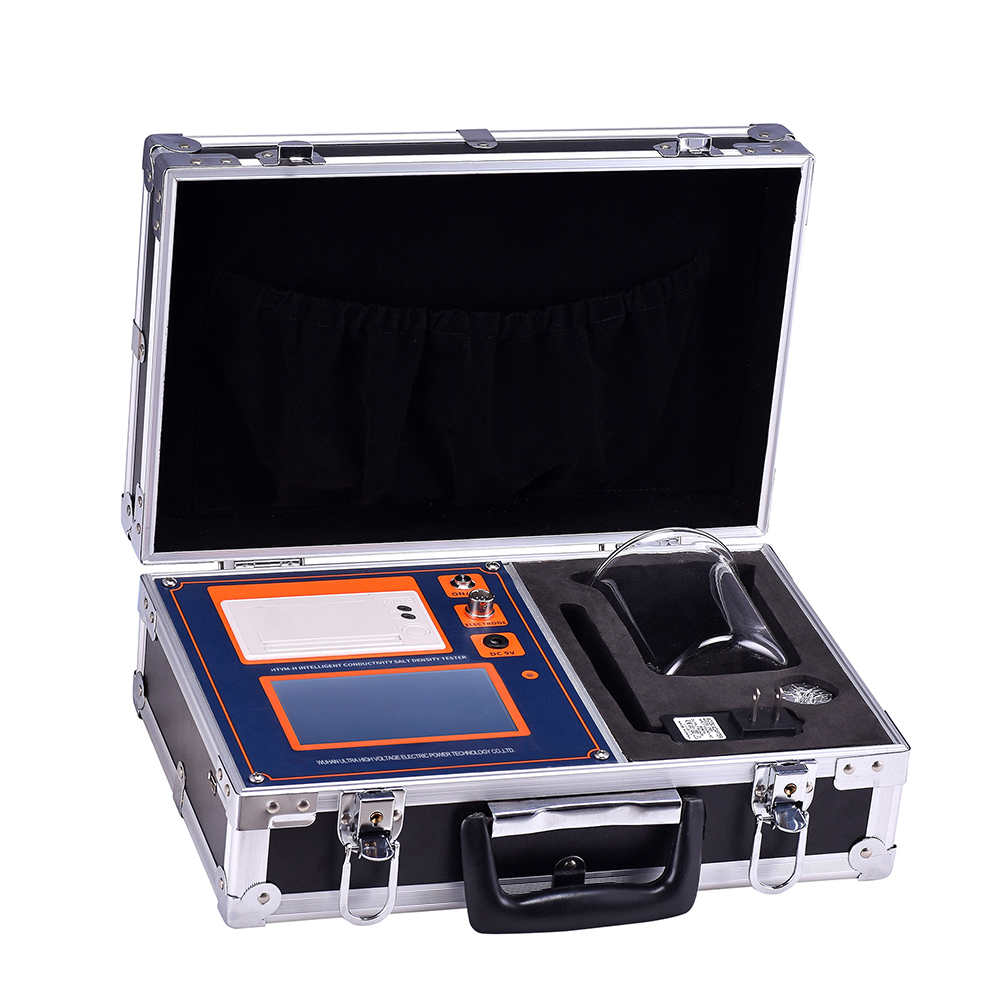
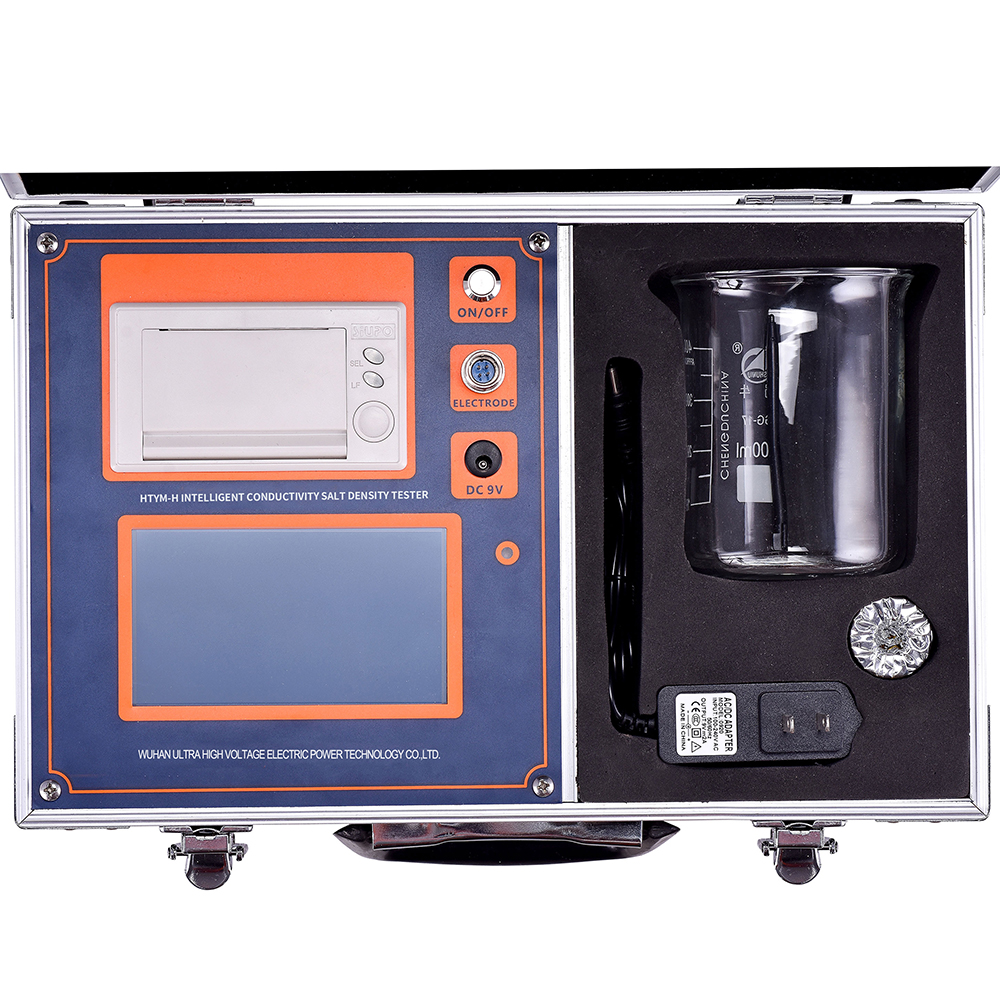
Wuhan UHV Power Technology Co.,Ltd., is a professional manufacturer and supplier of high-voltage power testing equipment in China.The Intelligent Conductivity Salt Density Tester is a specialized instrument designed to measure the equivalent salt deposit density (ESDD) on insulator surfaces, as well as the conductivity and temperature of the solution. It is primarily used for anti-pollution flashover testing in power systems. With high measurement accuracy, a wide measurement range, and convenient operation, the instrument is widely applied in electric power, education, scientific research, and other related industries.
The classification of pollution levels and the development of pollution zone maps are fundamental to anti-pollution flashover work. Accurate pollution zone mapping is essential for selecting the appropriate external insulation creepage distance for electrical porcelain used in power transmission and transformation equipment. The equivalent salt deposit density on insulator surfaces serves as a quantitative indicator for assessing the severity of insulation pollution on electrical porcelain and is a key basis for pollution level classification and pollution zone mapping. Therefore, salt density measurement is of great significance to the safe operation of power systems.
Reference Standards
Standard for Environmental Pollution Classification and External Insulation Selection for Overhead Lines, Power Plants, and Substations
GB/T 16434-200X – *Selection and Dimensioning of High-Voltage Insulators for Polluted Conditions – Part 1: Definitions, Information, and General Principles*
Q/GDW 152-2006 – Standard for Classification of Environmental Pollution Zones and Selection of External Insulation for Overhead Lines, Power Plants, and Substations
Product Characteristics
1、With range automatic function switching, fast measuring speed (2.5s/ time).
2、Measurement range:0.0001mg/센티미터2~9.9999mg/센티미터2.
3、English and Chinese interface can switch.
4、Use 480*272 color touch LCD screen.
5、It can display and print salt density, conductivity, temperature, pollution grade and uniform creepage ratio distance.
6、Automatic temperature compensation is used to directly display standard conductivity and equivalent attached salt (ESDD) at 20℃.
7、Function that automatically removes salt from the original solution, reducing the requirement for cleaning fluid.
8、The salt density (ESDD) measured without charge is automatically converted into the salt density (ESDD) measured with charge.
9、It can store 100,000 sets of records and export them to usb flash drive or printer.
10、Can consult, delete, export a single record, also can delete all records.
11、Built-in large-capacity rechargeable lithium battery (2600mAh), suitable for field use.
기술적인 매개변수
| 측정 범위 | 소금 밀도 | 0.0001mg/cm22~9.9999mg/cm2 |
| 측정온도 | 0℃~100℃ | |
| 측정 전도도 | 0~200000μs/cm | |
| basic error | 염분 밀도 측정 | 분해능0.0001mg/cm22 |
| 전체 범위 정확도 | ±2% | |
| 측정온도 | 해상도0.1℃, 정확도±0.5℃ | |
| 측정 전도도 | 분해능0.01μs/cm | |
| 환경 온도 | 0℃~60℃ | |
| 환경 습도 | <90% | |
| Diemension and weight | complete machine case diemension | 356mm*260mm*133mm |
| 완전한 기계 중량 | about 2.5kg | |
Application Scenarios
Substation insulator contamination testing
Measures salt density on insulator surfaces, evaluates contamination level, and supports anti-pollution flashover maintenance.
Transmission line contamination monitoring
Used for contamination investigation of transmission line insulators and operating condition assessment.
Contamination area classification and mapping
Provides data basis for regional contamination level classification and external insulation configuration.
Power plant and power equipment testing
Tests contamination of outdoor insulation equipment and develops cleaning and maintenance schedules.
Coastal and high salt-fog area testing
Evaluates the impact of salt-fog environments on insulators and reduces the risk of pollution flashover.
Insulator anti-pollution flashover testing
Used for insulator contamination testing, salt density measurement, and anti-pollution flashover performance research.
 |  |
FAQ about Conductance Salt Density Tester
Q: Why is it necessary to measure insulator salt density?
A: Salt and other contaminants on the insulator surface can form a conductive layer when damp, reducing insulation performance and increasing the risk of pollution flashover. Salt density measurement can provide data support for pollution flashover risk assessment, equipment cleaning, and anti-pollution flashover measures.
Q:What is ESDD?
A:ESDD stands for Equivalent Salt Deposit Density. It is a quantitative indicator used to evaluate the severity of pollution deposited on the surface of electrical insulators. ESDD is an important reference for insulation pollution classification and external insulation design.
Q: Can the test results be used for power equipment maintenance decision-making?
A: Yes. After accumulating salt density measurement data over time, contamination trends across different equipment and areas can be analyzed, providing data support for insulator cleaning schedules, inspection frequency, and anti-pollution flashover measures.
Q: Are the test results of the Conductance Salt Density Tester stable?
A: The device uses conductivity measurement to detect the contamination solution and incorporates temperature compensation calculations to determine equivalent salt density, which reduces the impact of ambient temperature changes on test results, making it suitable for both on-site and laboratory testing.
Q:What is the UHV-560 Conductance Salt Density Tester used for?
A:The UHV-560 is designed to measure the equivalent salt deposit density (ESDD) on insulator surfaces. It can also measure solution conductivity and temperature. The instrument is mainly used for pollution flashover testing, pollution level assessment, and pollution zone mapping in power systems.
Built for accurate and reliable high-voltage testing, our conductance salt density testers offer stable performance and practical solutions for power utilities, laboratories, and research institutions. As an experienced manufacturer and supplier of UHV testing equipment, Wuhan UHV Power Technology Co.,Ltd is committed to providing quality products, professional technical support, and flexible solutions for customers worldwide. Whether you need a single unit or a larger order, we offer a competitive price and responsive service. Contact us for product details and a customized quotation.